
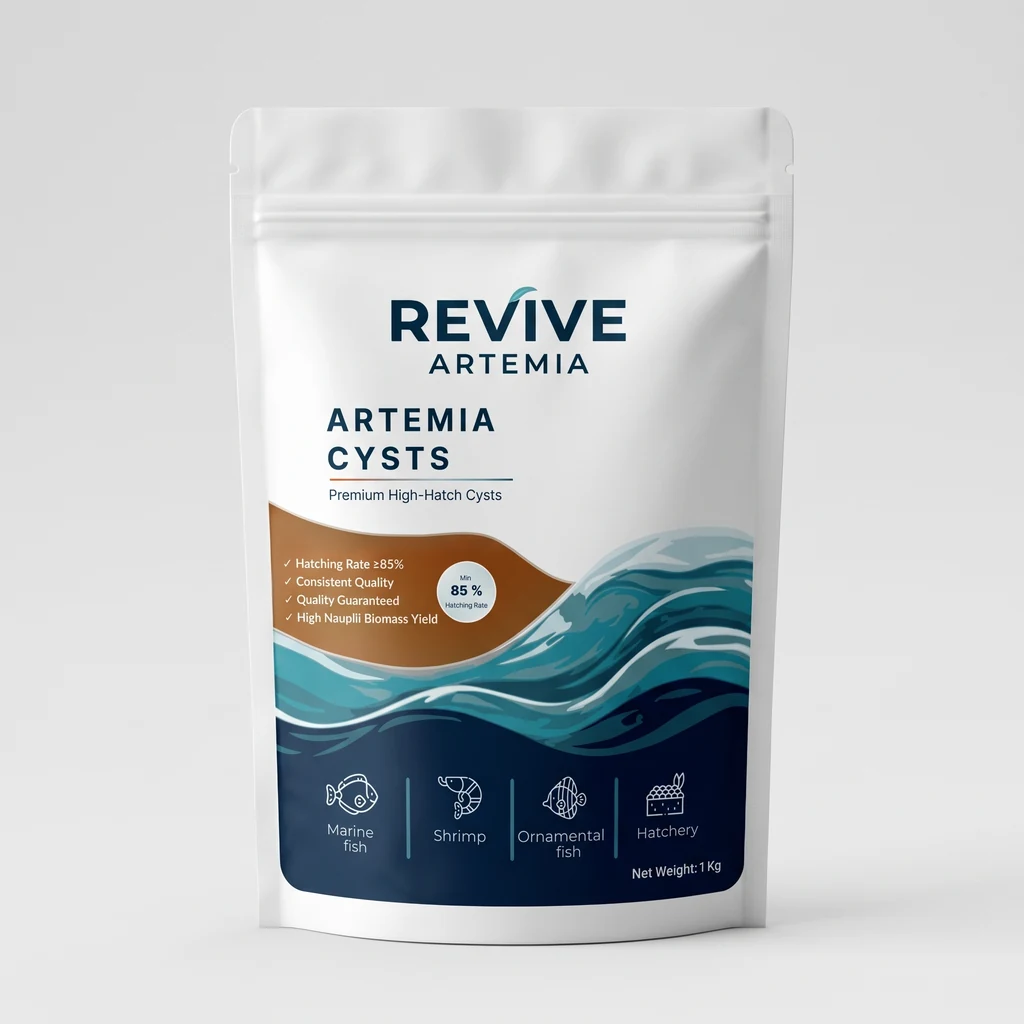
Artemia Cysts (Brine Shrimp Eggs)
High-hatch rate live feed cysts, essential for marine larval nutrition and survival.
- Typical hatching rate of at least 85%, batch-tested before dispatch
- High hatch-out efficiency and nutritional consistency
- Long shelf life with no cold-chain requirement
- Used by hatcheries across Türkiye, South Korea and the Middle East
- Equally suited to aquarium, pet-shop and reef-tank feeding
Artemia Cysts (Brine Shrimp Eggs) — Full Description
Premium Artemia cysts (brine shrimp eggs) selected for high hatchability, small nauplii size, and high energy content. The global benchmark for hatchery live feed.
CPG (Number of Cyst per Gram) varies with size and genus of Artemia and is not a quality indicator on its own. Quality is defined by Hatching Rate and by the nutritional value and biomass of the resulting nauplii.
Every batch is hatch-tested before dispatch and typically returns at least 85%, so the figure quoted on your consignment is the figure measured for that lot.
Key Technical Specifications
Detailed Composition & Analysis
Physical & Hatching Specifications
| Component | Value |
|---|---|
| Moisture Content | < 9.0% |
| Crude Protein | 55.0% |
| Crude Fat | 12.0% |
| Cysts Per Gram (CPG) | 210,000 |
| Typical Hatching Rate | ≥ 85% |
Omega-3 Essential Fatty Acid Profile
| Fatty Acid | Lipid No. | % of Lipids | mg / 100g |
|---|---|---|---|
| Alpha-Linolenic Acid (ALA) | C18:3 | 24.8% | 3,931.7 mg |
| Eicosapentaenoic Acid (EPA) | C20:5 | 6.5% | 1,028.7 mg |
| Docosahexaenoic Acid (DHA) | C22:6 | 0.1% | 20.8 mg |
Omega-6 Essential Fatty Acid Profile
| Fatty Acid | Lipid No. | % of Lipids | mg / 100g |
|---|---|---|---|
| Linoleic Acid (LA) | C18:2 | 5.3% | 834.0 mg |
| Arachidonic Acid (AA) | C20:4 | 1.0% | 160.4 mg |
Artemia Decapsulation & Hatching Protocol
Standard laboratory operating procedures for maximum nauplii yield and biosecurity.
Prepare Incubation Solution
Prepare a saline solution using sea salt at 28–30 ppt (g/L) or UV/ozone treated filtered seawater. Adjust pH to 7.9–8.5 (add 2 g Sodium Bicarbonate NaHCO₃ per liter if pH is lower). Maintain water temperature at 27–29 °C.
Prepare Decapsulation Solution
Standard ratio for 454 g (1 lb) of dry cysts: use 1.5 L Sodium Hypochlorite (NaOCl - 10% active chlorine) combined with 34–50 ml saturated NaOH solution.
Hydration Phase
Place dry Artemia cysts in clean freshwater under strong aeration for 1 hour at 20–25 °C. Hydration is complete when cysts change from biconcave disk shape to fully spherical.
First Decapsulation Bath
Transfer hydrated cysts into 0.75 L of decapsulation solution. Stir continuously for 25–40 minutes until the outer brown shell dissolves and turns bright orange.
Separation & Washing
Immediately strain the decapsulated embryos through a 125 µm sieve mesh and rinse thoroughly with clean tap water or seawater to remove residual chlorine.
Second Decapsulation (Optional)
If shell fragments remain, perform a brief 3–5 minute secondary wash bath in diluted NaOCl solution before final rinsing.
Chemical Dechlorination & Activation
Neutralize active chlorine by dipping strained cysts into a 0.1% sodium thiosulfate (Na₂S₂O₃) or ascorbic acid solution for 1 minute.
Conical Reactor Incubation
Transfer activated cysts into a conical hatching vessel filled with 28–30 ppt seawater at 28–30 °C. Provide continuous bottom aeration and 2,000 Lux continuous light for 20–24 hours.
Harvesting & Nauplii Collection
Turn off aeration for 10–15 minutes. Empty shells float to the surface while live phototactic nauplii concentrate at the bottom light source for easy siphoning.
Key Applications
- Marine finfish larvae (sea bass, sea bream, grouper)
- Shrimp post-larvae
- Ornamental fish larvae
- Home aquariums & reef tanks
- Public aquariums & pet shops
Storage & Logistics
Store below 4 °C in sealed packaging, away from moisture and repeated air exposure.
Why buyers choose this line
Batch-tested hatching rate
Typically at least 85%, measured per batch before dispatch — that figure is what determines how many nauplii a gram actually delivers.
Cyst count is not a quality measure
CPG — cysts per gram — varies with the size and genus of the Artemia and says nothing about quality. Hatching rate and nutritional value are what to compare.
No cold-chain dependency
Dry cysts ship and store without refrigerated logistics, so the delivery window is set by freight rather than by temperature.
Multi-origin supply, matched to destination
Sourced across origins and matched to the destination's requirements, which is what keeps a season workable when one source is disrupted.
Frequently Asked Questions
Technical parameters, storage, biosecurity, and hatchery protocols for Artemia Cysts (Brine Shrimp Eggs).
Artemia Hatching Protocol
Access step-by-step scientific incubation parameters — salinity standards (25–35 ppt), temperature limits (28–30 °C), and hatching-cone setup — for consistent, high-yield Artemia nauplii. Artemia is fed directly to fish and shrimp larvae, a separate stage from rotifer culture.
Complementary Aqua Inputs & Solutions
Discover biosecure live feeds, specialized hatchery ova, functional feed additives, and Mediterranean seafood exports engineered to optimize your operational workflow.
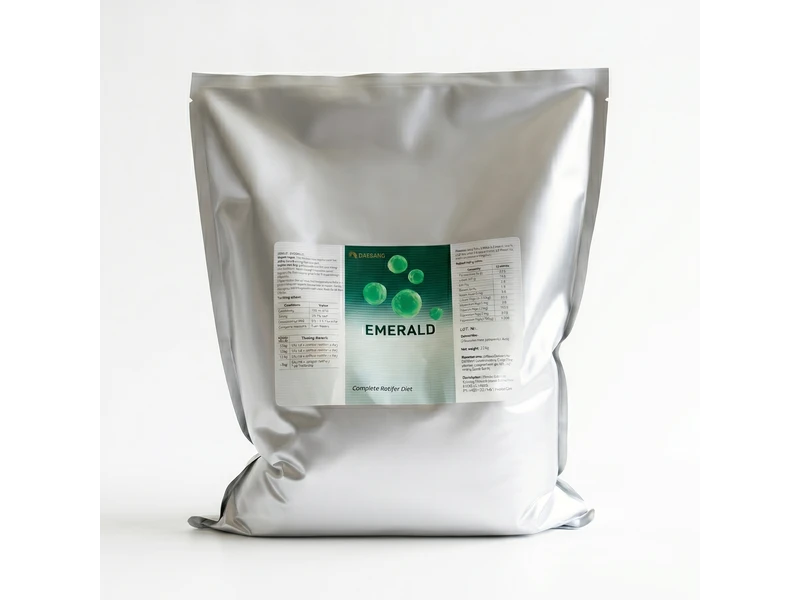
The rotifer diet for high- and low-density cultivation — spray-dried Chlorella from axenic culture, for batch, continuous and green-water systems.
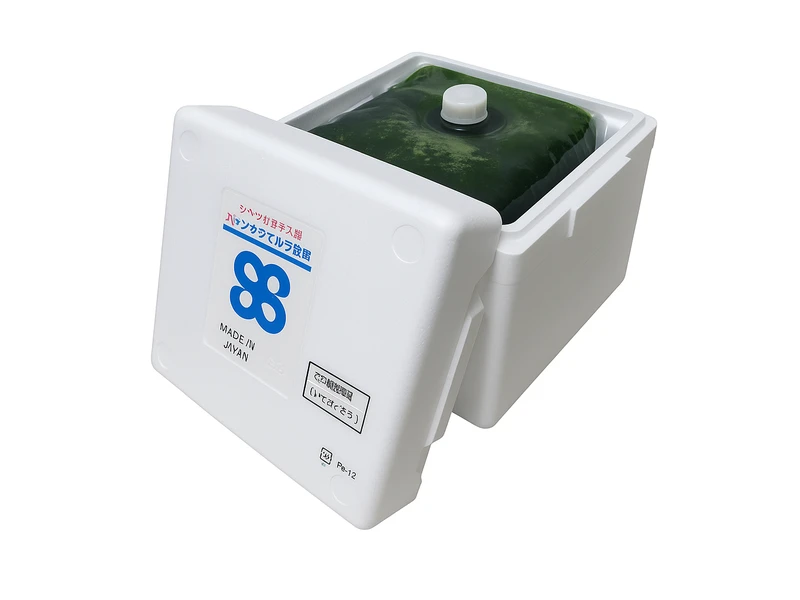
Concentrated liquid Chlorella microalgae, harvested fresh and shipped under cold chain.