
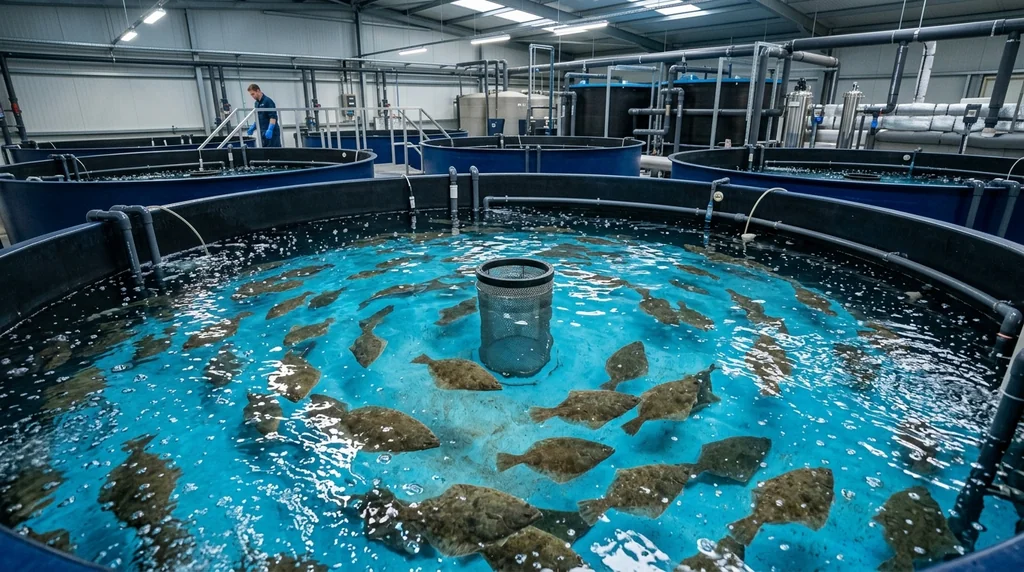
Olive Flounder, packed the way your market buys it
Paralichthys olivaceus
Sashimi-grade flatfish from certified South Korean partner farms, shipped as frozen fillets, fresh gutted whole fish, or live. Size bands, fin and salting options, and the export documentation your importer will ask for.
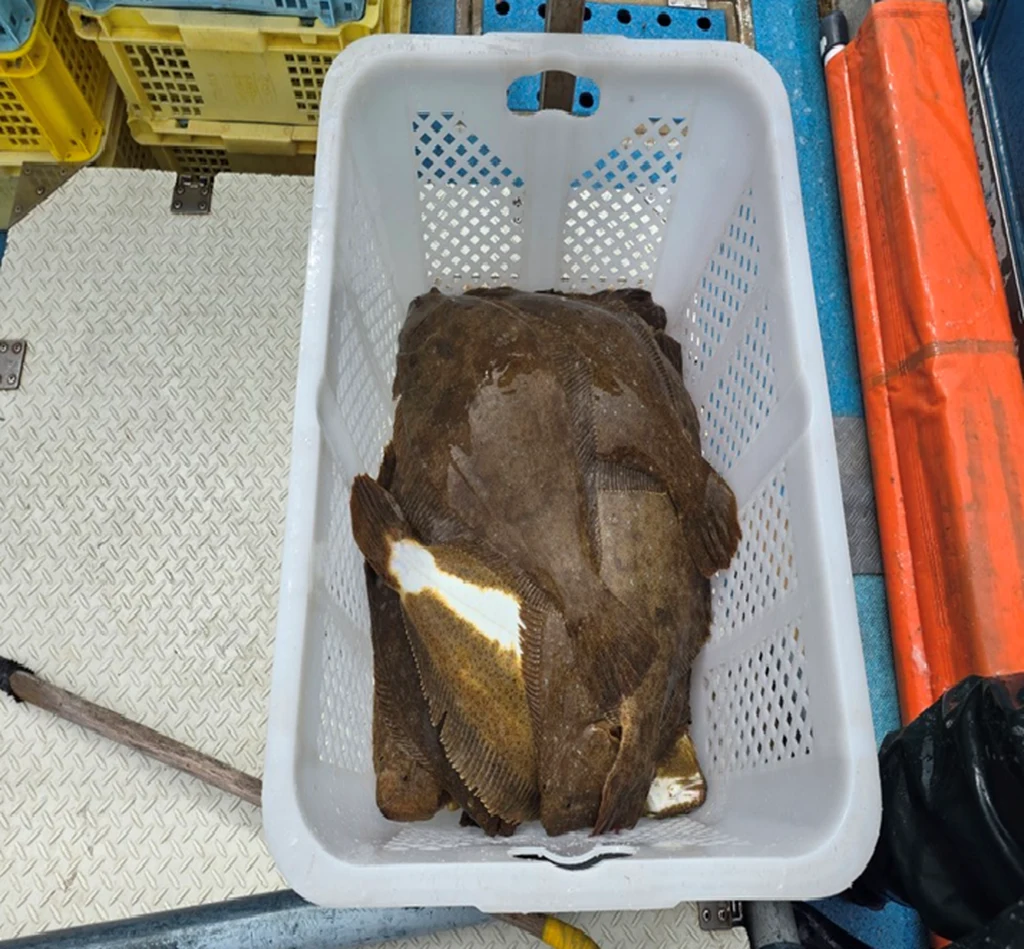 Live Harvest Basket
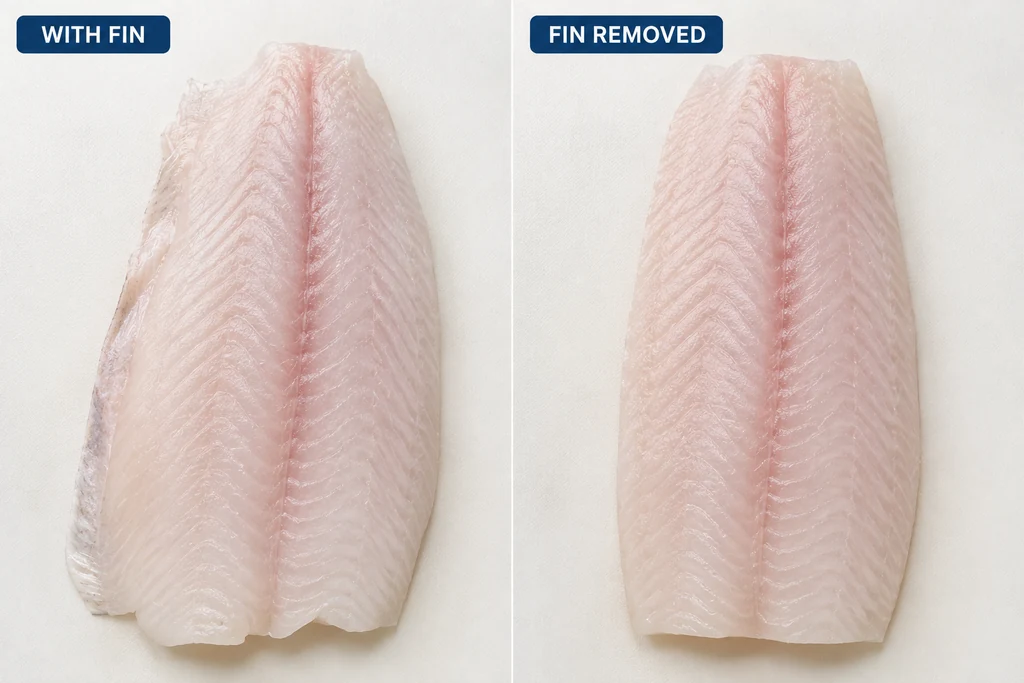 Sashimi Fillet Specs
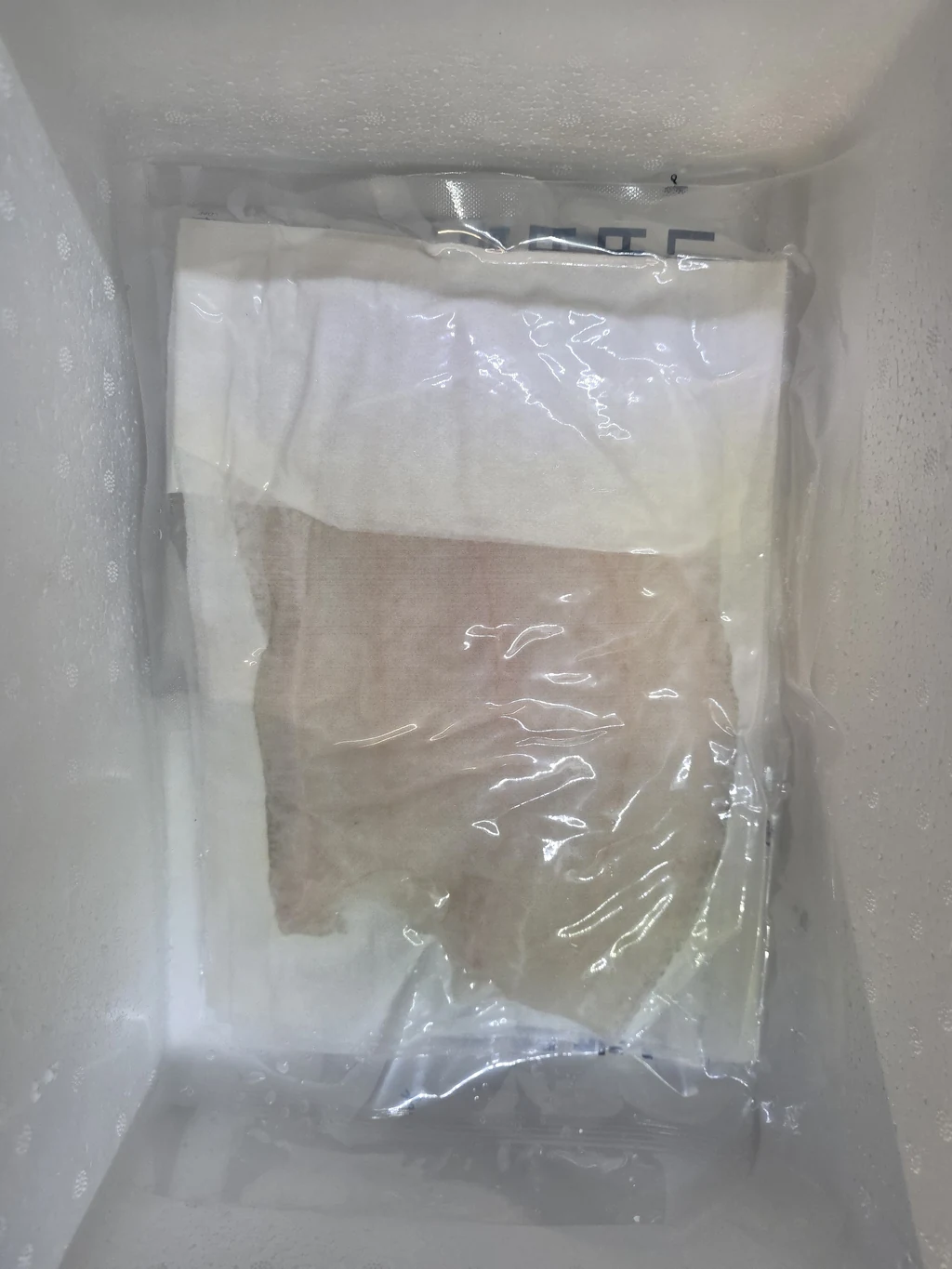
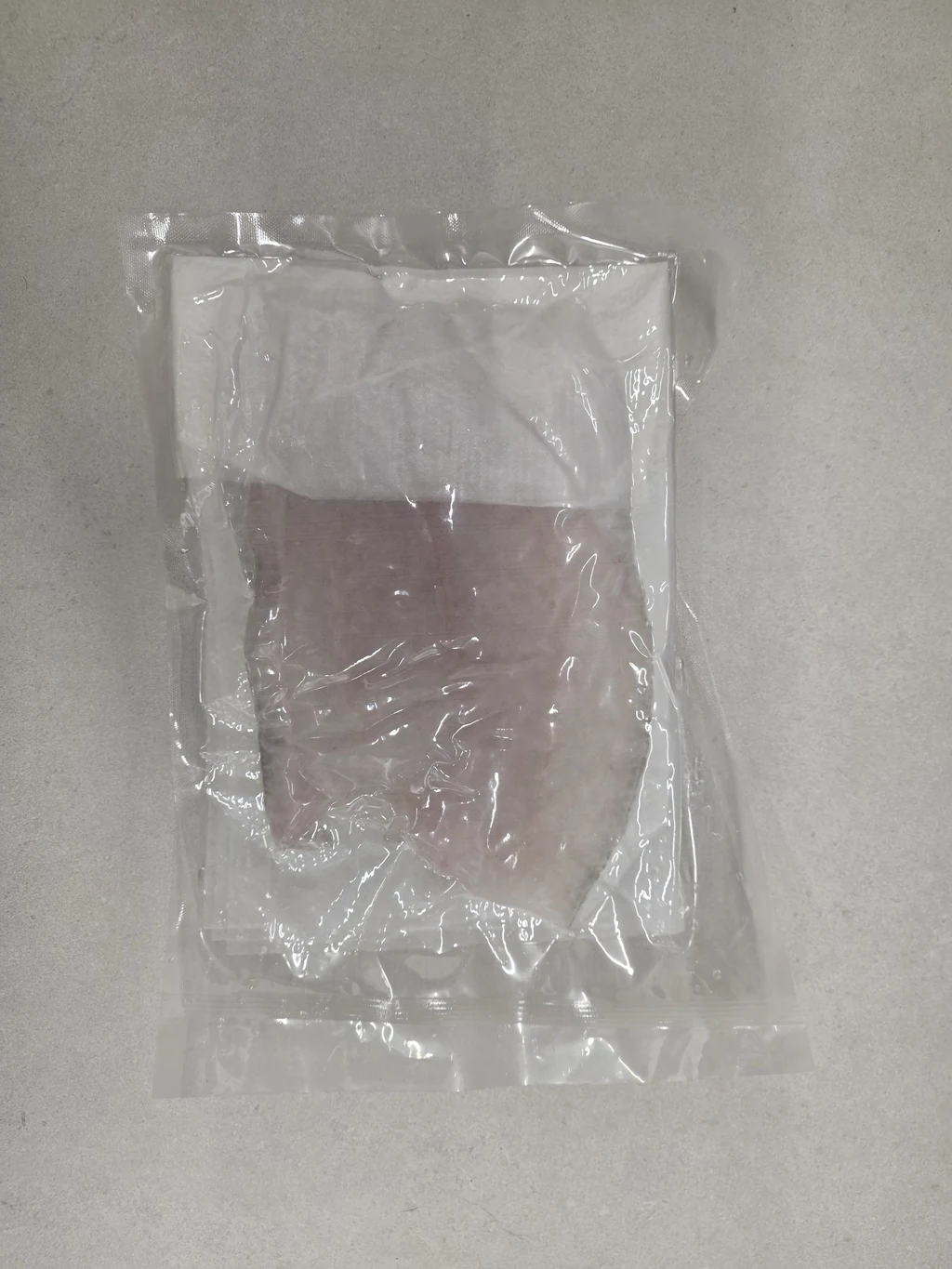 Vacuum Fillet Pack
 EPS Export Shipper
Three commercial formats
Raw-fish counters, sashimi restaurants and live-tank retail each need the fish presented differently. Tell us the market and we cut, pack and document to suit it.
Frozen fillet
Skin-on fillets frozen to export grade, cut two per fish and graded by piece weight.
Precision sashimi processing: trimmed to exact buyer requirements for sushi and raw-counter slicing.
Hermetically sealed skin packaging locks in moisture, protecting texture and taste across reefer cold storage.
Size bands
Two fillets come from one fish, so piece weight follows harvest size: our largest grade, a 2.0 – 2.5 kg live fish, yields the 500 – 600 g/pc band.
Fresh gutted
Whole gutted fish on flake ice, air-freighted for raw-market and sashimi counters.
Harvested and eviscerated under chilled conditions, packed directly onto food-grade flake ice at 0–2 °C.
High-density expanded polystyrene crates maintain steady chill integrity throughout international air transfer.
Size bands
2.0 – 2.5 kg is the largest live fish we produce, which sets the top band.
Live
Packed in oxygen-filled bags or dedicated air containers for live-tank restaurants and retail.
Conditioned in clean ocean-water aeration tanks prior to bagging, ensuring minimal stress and high survival.
Live transport relies on strict flight corridors and oxygen-enriched water containers. We calculate door-to-door transit to your airport before confirming orders.
Tell us the destination airport and we will confirm whether the corridor fits the window before you commit to an order.
Getting it there in condition
Frozen moves by reefer, fresh and live move by air. The constraint that decides everything on a live shipment is time, so we confirm the corridor before you commit to an order.
Air freight
Fresh gutted on flake ice and live fish in oxygen-filled bags or dedicated air containers, with temperature logging and customs brokerage. Tell us the destination airport.
Reefer sea freight
Frozen fillets in temperature-logged reefer containers, documented to clear EU, US and GCC border inspection. Tell us the destination port.
Thermal Packaging
6 kg and 10 kg EPS insulated master cartons with specialized ice-pack barriers to maintain 0–2 °C core temperatures throughout flight connections.
Expanded Polystyrene (EPS) Protective Shippers
Our packaging prevents thermal spikes, handling compression, and leakage during multi-leg air freight. Temperature recorders accompany commercial export orders to confirm unbroken cold chains upon customs release.
Worked example: Korea to the Gulf
Live fish stay viable 24 to 30 hours door-to-door under optimal conditions. Beyond 30 hours the risk rises sharply and we will not ship it. This corridor runs comfortably inside the window:
- 3 – 5 hPacking and transfer to Incheon (ICN)
- 9 – 10 hFlight time
- 3 – 6 hArrival handling, customs and pickup
Roughly 18 – 24 hours total — inside the safe window, with margin for delay.
Export documentation
Issued with every shipment on request. Tell us which your importer requires and we prepare them before dispatch.
What we need in order to quote
Include as much of this as you can and we can price the shipment rather than starting with questions. Anything you do not know yet, we will work out with you.
- Target market — for example raw-fish counters or Japanese restaurants
- Format and size band, plus fins on or trimmed, plain or lightly salted
- Destination port for frozen, or destination airport for fresh and live
- Order quantity — kg, tonnes or FCL
- Order frequency, if this is a repeating requirement
- Which documents your importer requires, and your target delivery window
Frequently asked questions
The questions buyers ask us most about this page. The full set, filterable by subject, lives on our FAQ hub.