
Standard vs Decapsulated Artemia Cysts: Choosing the Right Form
Compare shell-on Standard Artemia Cysts and shell-free Decapsulated Artemia to find the right fit for your hatching setup, feeding protocol, and customer segment.
Standard vs Decapsulated Artemia: What's the Difference?
Artemia cysts naturally have a thick outer shell known as the chorion. Standard cysts are typically hatched before feeding, since very young fry and shrimp larvae have limited ability to digest the unhatched shell — many other species and older larvae tolerate it without issue.
Decapsulation is a chemical hydration and oxidation process that removes the outer chorion while leaving the living embryo intact in a thin membrane. This gives a higher net caloric density per gram and lets the cysts be fed directly without a separate hatching step — while Standard Cysts remain a cost-effective, widely used option for operations with established hatching infrastructure.
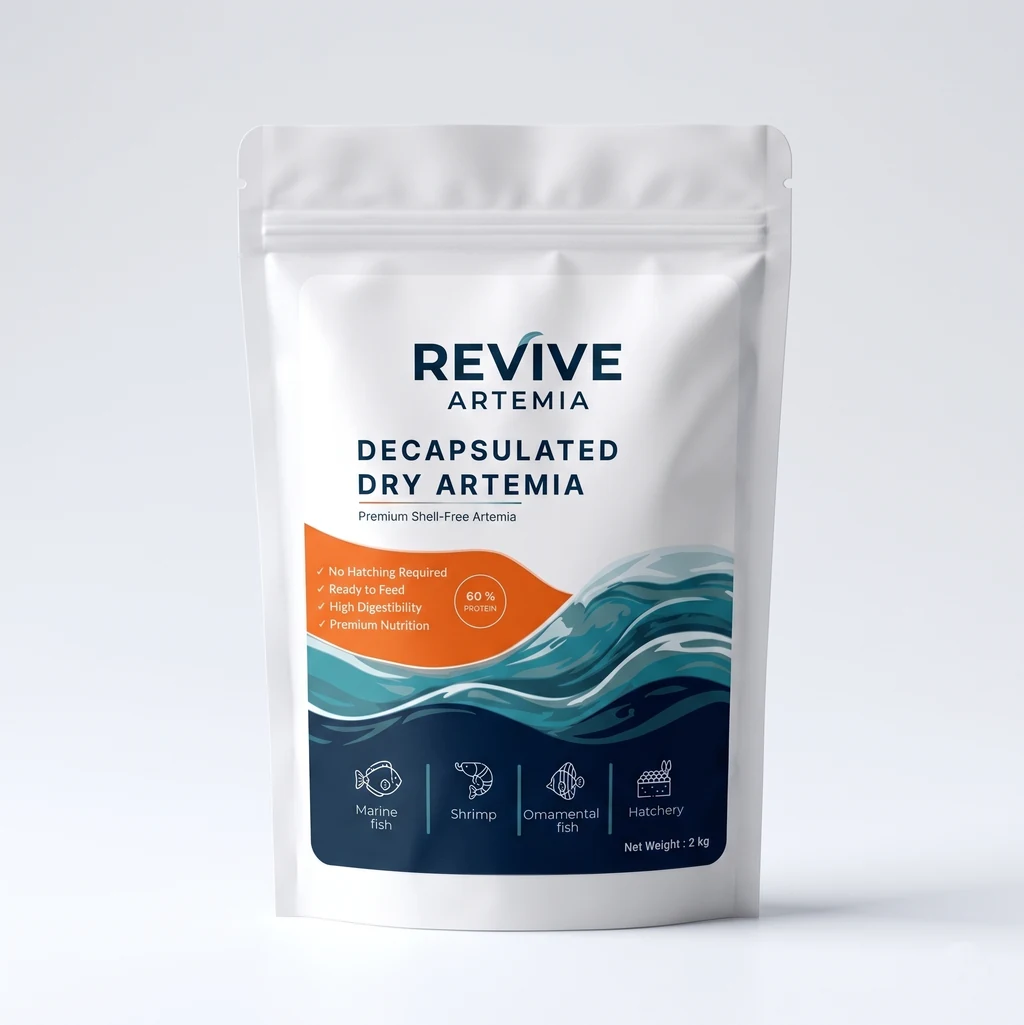
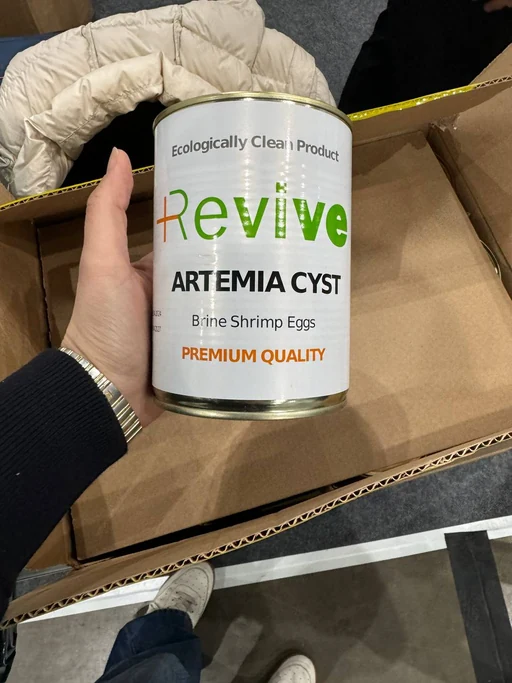
500g & 1000g Vacuum Sealed Cans
Shell-free dried cysts with 100% digestible embryonic membrane.
Key Nutritional Metrics
Shell On, Shell Off, On Its Way
The difference decapsulation makes is visible to the naked eye: brown shell-on cysts go in, orange shell-free embryos come out — ready to feed with zero hatching.
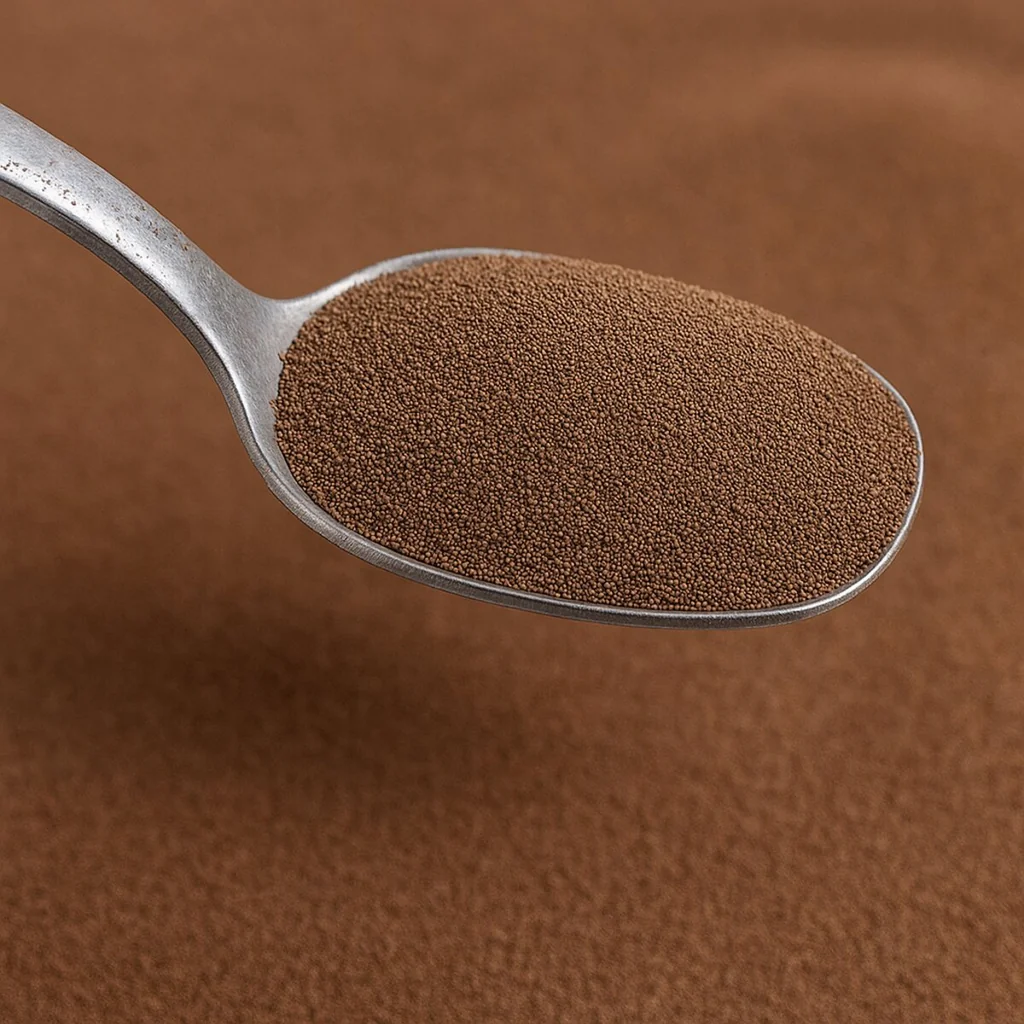
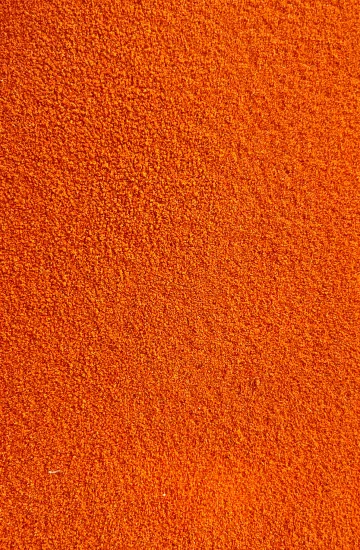
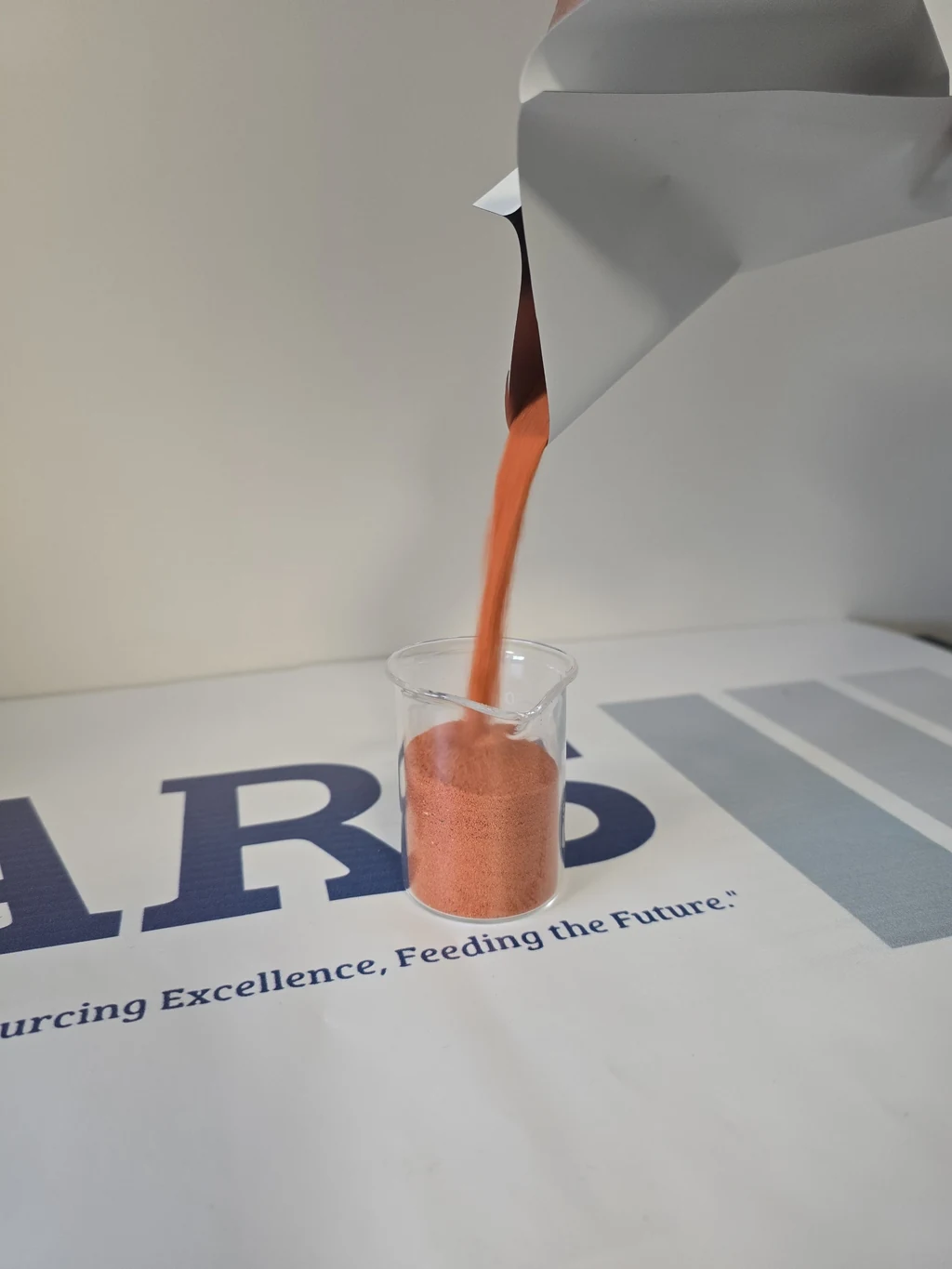
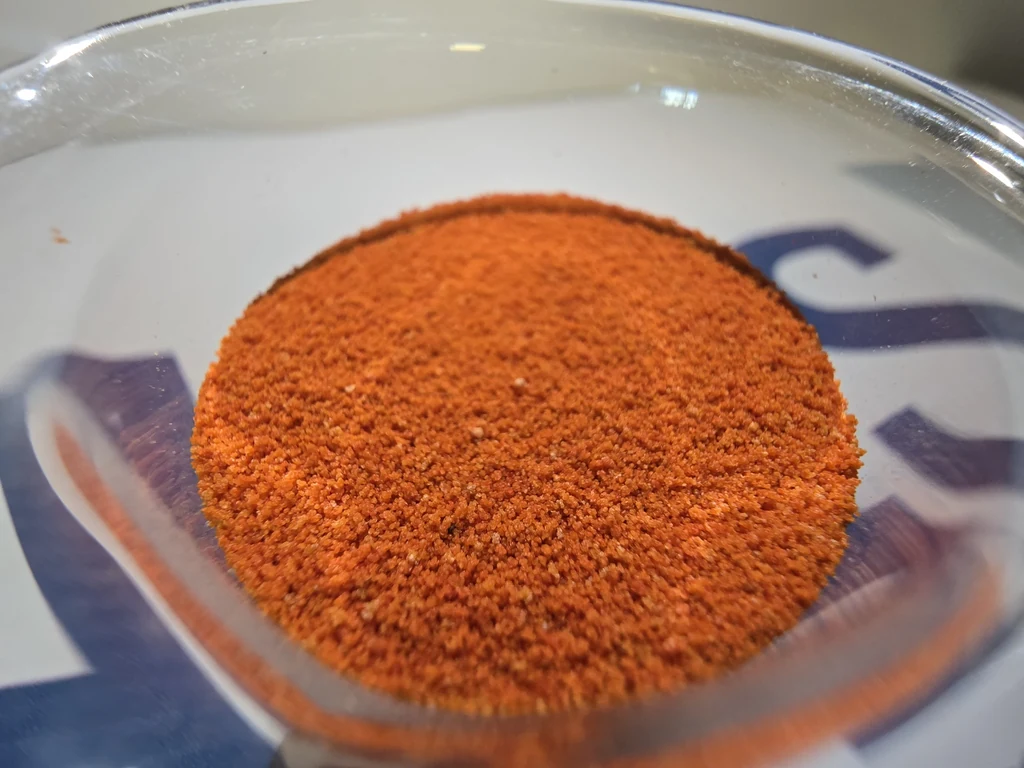
Standard Cyst vs Decapsulated Artemia
Retains its natural chorion shell. Hatch before feeding to very young fry, or feed directly to species that tolerate shell content.
Chorion fully removed. Higher net energy density (502 kcal/100g) with no hatching step — feed directly from the can.
Why Decapsulated Artemia Outperforms Standard Hatching
100% Embryonic Energy Retained
Standard Artemia nauplii expend 25–30% of their endogenous lipid and glycogen reserves breaking through the rigid chorion during the 24-hour incubation cycle.
Zero Shell · Zero Pathogen Vector
The outer chorion is the primary colonization site for marine bacteria including Vibrio spp. Hypochlorite decapsulation completely dissolves the shell, sterilizing the embryo surface and preventing larval gut impaction.
- 0% indigestible chitin shells
- No intestinal blockage in delicate fry
- Surface disinfection during decapsulation
Direct Feeding · Zero Incubation Cones
Eliminate 24-hour hatching cycles, continuous aeration pumps, light banks, and messy light-separation steps. Simply hydrate dried decapsulated cysts in fresh or salt water for 20–30 minutes and distribute directly.
Soaking softens the cuticular membrane and allows buoyant suspension in the larval water column.
Standard Hatchery Preparation Protocol
Dose exact dry grams per tank based on larval density (no hatch-percentage uncertainty).
Submerge in clean fresh or brackish water (10–15 L water per kg of cysts) with gentle aeration.
Collect on a 100–120 µm plankton sieve; briefly rinse with system water before broadcast.
Evenly broadcast across larval tanks. Neutral buoyancy keeps embryos suspended in the water column.
From Dormant Cyst to Adult, and Back Again
Dehydrated, cryptobiotic — stable for years in dry storage
Chorion absorbs water and splits within 18–24 hours
Single eye, three appendage pairs — first live-feed stage
Reaches maturity in 2–3 weeks; produces new cysts or live young
Technical Comparison: Standard Cysts vs Decapsulated Artemia
Which Form Fits Your Operation?
Matching Standard and Decapsulated Artemia to commercial, public, retail, and home aquarist use cases.
Commercial Hatcheries & Marine Farms
Operations with established hatching infrastructure often use Standard Cysts as a cost-effective live feed. For very young or sensitive post-larvae (sea bass, sea bream, grouper, shrimp), many hatcheries switch to Decapsulated Artemia to skip the hatching step and reduce shell-handling labor.
Public Aquariums & Marine Exhibits
Decapsulated Artemia gives a ready-to-feed, high-energy option for delicate filter feeders, seahorses, and pipefish, while Standard Cysts suit exhibits where on-site hatching is already part of the routine.
Aquarium Shops & Wholesale Retailers
Both formats are available in shelf-stable retail cans (500g / 1kg) — Standard Cysts for customers who hatch their own live feed, and Decapsulated Artemia for customers who want a direct-feed option.
Reef & Aquarium Keepers
Decapsulated Artemia is convenient for direct feeding into reef tanks and fry-rearing setups without a hatching station, while Standard Cysts suit anyone who prefers to hatch their own nauplii.
Frequently asked questions
The questions buyers ask us most about this page. The full set, filterable by subject, lives on our FAQ hub.