
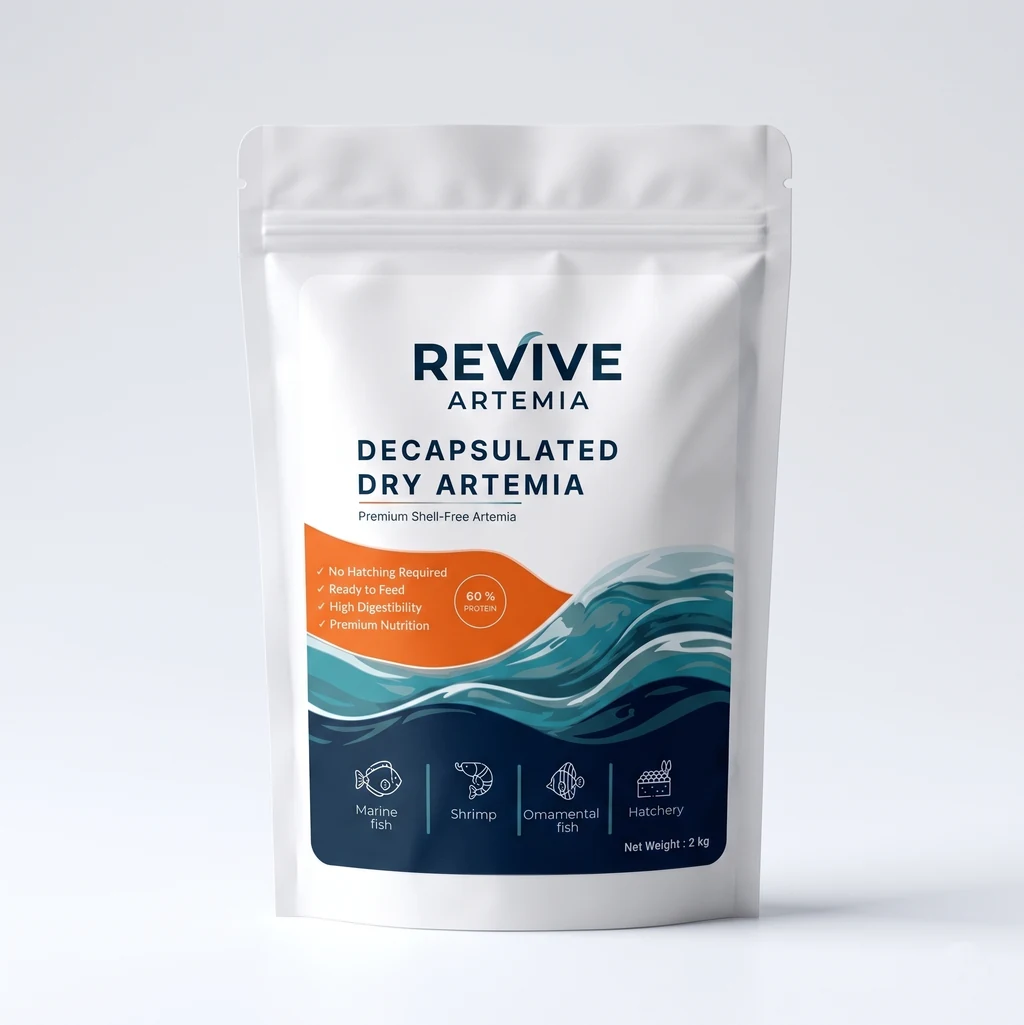
Decapsulated Dry Artemia Cysts
Shell-free Artemia cysts for direct feeding, eliminating hatching steps and bacterial contamination risk.
- Shell-free & ready to use — no hatching required
- 0% shell content · 0% impurities
- Moisture controlled at 4–5%
- Improved biosecurity in larval systems
- Operational efficiency: no incubation cones needed
Decapsulated Dry Artemia Cysts — Full Description
Decapsulated Artemia fish fry feed made from shell-free cysts. Check the product preparation instructions and confirm suitability for the species and feeding stage.
Decapsulated dry Artemia cysts are non-hatching cysts whose hard, indigestible outer chorion shell has been completely removed through a controlled biological oxidation process. Delivered with 0% shell content, 0% impurities, and moisture controlled at 4–5%, they provide an instant, ready-to-feed live feed substitute.
Because the embryo does not expend metabolic energy breaking through its cyst wall, decapsulated cysts retain 100% of their raw nutritional value — delivering 61% crude protein, 24.5% lipids, and 502 kcal per 100 g. Crucially, removing the shell completely eliminates the biosecurity hazard of shell-borne pathogenic bacteria (including Vibrio spp.) and prevents lethal gut blockages in early larval fish and shrimp.
Suitable for post-larval shrimp (PL1 to PL20), marine fish larvae (seabass, seabream), and ornamental hatchery systems. The dried cysts hydrate quickly in seawater, remaining neutrally buoyant in the water column to stimulate aggressive feeding strikes without requiring aeration cones or hatching infrastructure.
Key Technical Specifications
Detailed Composition & Analysis
Decapsulated Shell-Free Specifications
| Parameter | Laboratory Standard |
|---|---|
| Form | Dry shell-free decapsulated cysts |
| Chorion Shell Content | 0% (Zero shell contamination) |
| Light & Heavy Impurities | 0% Light / 0% Heavy |
| Moisture Control | 4.0 – 5.0% |
| Crude Protein | 61.0% |
| Crude Fat | 24.5% |
| Caloric Energy Density | 502 kcal / 100g |
Artemia Decapsulation & Hatching Protocol
Standard laboratory operating procedures for maximum nauplii yield and biosecurity.
Prepare Incubation Solution
Prepare a saline solution using sea salt at 28–30 ppt (g/L) or UV/ozone treated filtered seawater. Adjust pH to 7.9–8.5 (add 2 g Sodium Bicarbonate NaHCO₃ per liter if pH is lower). Maintain water temperature at 27–29 °C.
Prepare Decapsulation Solution
Standard ratio for 454 g (1 lb) of dry cysts: use 1.5 L Sodium Hypochlorite (NaOCl - 10% active chlorine) combined with 34–50 ml saturated NaOH solution.
Hydration Phase
Place dry Artemia cysts in clean freshwater under strong aeration for 1 hour at 20–25 °C. Hydration is complete when cysts change from biconcave disk shape to fully spherical.
First Decapsulation Bath
Transfer hydrated cysts into 0.75 L of decapsulation solution. Stir continuously for 25–40 minutes until the outer brown shell dissolves and turns bright orange.
Separation & Washing
Immediately strain the decapsulated embryos through a 125 µm sieve mesh and rinse thoroughly with clean tap water or seawater to remove residual chlorine.
Second Decapsulation (Optional)
If shell fragments remain, perform a brief 3–5 minute secondary wash bath in diluted NaOCl solution before final rinsing.
Chemical Dechlorination & Activation
Neutralize active chlorine by dipping strained cysts into a 0.1% sodium thiosulfate (Na₂S₂O₃) or ascorbic acid solution for 1 minute.
Conical Reactor Incubation
Transfer activated cysts into a conical hatching vessel filled with 28–30 ppt seawater at 28–30 °C. Provide continuous bottom aeration and 2,000 Lux continuous light for 20–24 hours.
Harvesting & Nauplii Collection
Turn off aeration for 10–15 minutes. Empty shells float to the surface while live phototactic nauplii concentrate at the bottom light source for easy siphoning.
Key Applications
- Fish larvae and fry
- Shrimp post-larvae
- Broodstock conditioning
- Ornamental species
- Home aquariums & reef tanks
- Pet shops & fish breeders
Storage & Logistics
Store in a cool, dry place. Reseal cans after use to preserve moisture control.
Standard Cyst vs Decapsulated Artemia
Retains its natural chorion shell. Hatch before feeding to very young fry, or feed directly to species that tolerate shell content.
Chorion fully removed. Higher net energy density (502 kcal/100g) with no hatching step — feed directly from the can.
Why Decapsulated Artemia Outperforms Standard Hatching
100% Embryonic Energy Retained
Standard Artemia nauplii expend 25–30% of their endogenous lipid and glycogen reserves breaking through the rigid chorion during the 24-hour incubation cycle.
Zero Shell · Zero Pathogen Vector
The outer chorion is the primary colonization site for marine bacteria including Vibrio spp. Hypochlorite decapsulation completely dissolves the shell, sterilizing the embryo surface and preventing larval gut impaction.
- 0% indigestible chitin shells
- No intestinal blockage in delicate fry
- Surface disinfection during decapsulation
Direct Feeding · Zero Incubation Cones
Eliminate 24-hour hatching cycles, continuous aeration pumps, light banks, and messy light-separation steps. Simply hydrate dried decapsulated cysts in fresh or salt water for 20–30 minutes and distribute directly.
Soaking softens the cuticular membrane and allows buoyant suspension in the larval water column.
Standard Hatchery Preparation Protocol
Dose exact dry grams per tank based on larval density (no hatch-percentage uncertainty).
Submerge in clean fresh or brackish water (10–15 L water per kg of cysts) with gentle aeration.
Collect on a 100–120 µm plankton sieve; briefly rinse with system water before broadcast.
Evenly broadcast across larval tanks. Neutral buoyancy keeps embryos suspended in the water column.
Why buyers choose this line
No hatching step at all
Shell-free cysts feed directly, which removes the incubation cones, the separation step and the labour that goes with them.
Improved biosecurity in larval systems
No shell means no shell debris in the tank and one less contamination route into a larval system.
Full energy retained
Nothing is spent on hatching, so the energy the nauplius would have used reaches the larvae instead.
Predictable dosing
A dry, moisture-controlled product doses to a known weight rather than to a variable hatch.
Frequently Asked Questions
Technical parameters, storage, biosecurity, and hatchery protocols for Decapsulated Dry Artemia Cysts.
Artemia Hatching Protocol
Access step-by-step scientific incubation parameters — salinity standards (25–35 ppt), temperature limits (28–30 °C), and hatching-cone setup — for consistent, high-yield Artemia nauplii. Artemia is fed directly to fish and shrimp larvae, a separate stage from rotifer culture.
Complementary Aqua Inputs & Solutions
Discover biosecure live feeds, specialized hatchery ova, functional feed additives, and Mediterranean seafood exports engineered to optimize your operational workflow.
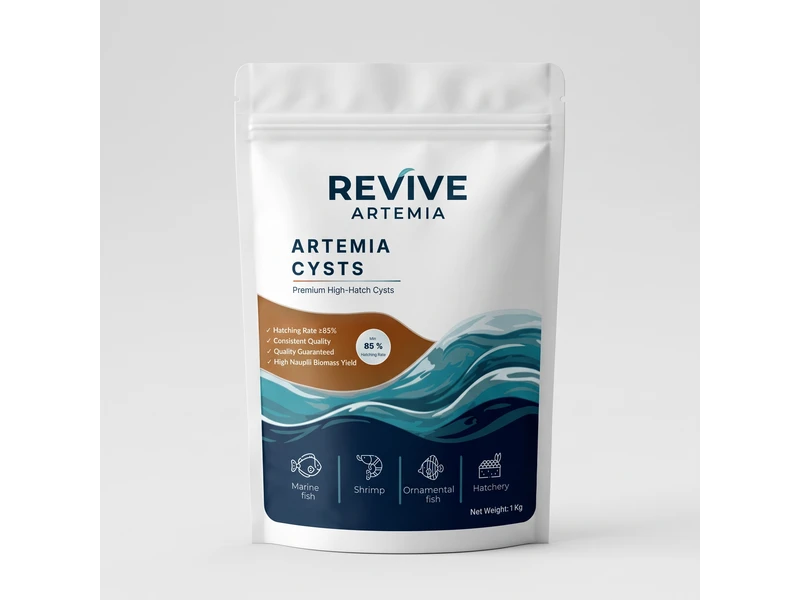
High-hatch rate live feed cysts, essential for marine larval nutrition and survival.
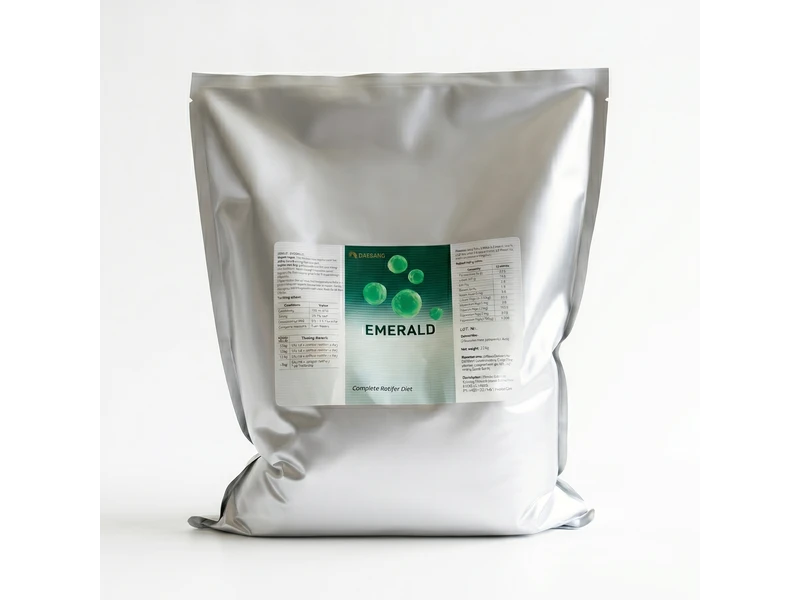
The rotifer diet for high- and low-density cultivation — spray-dried Chlorella from axenic culture, for batch, continuous and green-water systems.
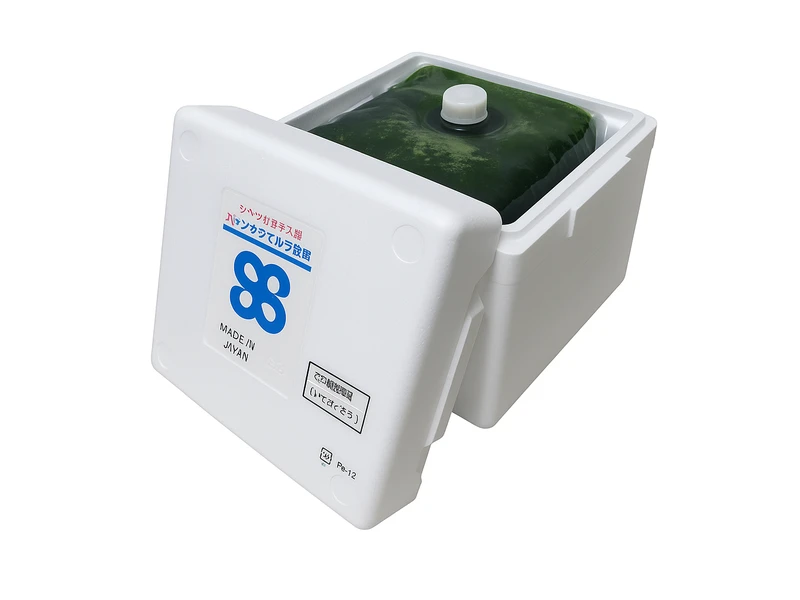
Concentrated liquid Chlorella microalgae, harvested fresh and shipped under cold chain.