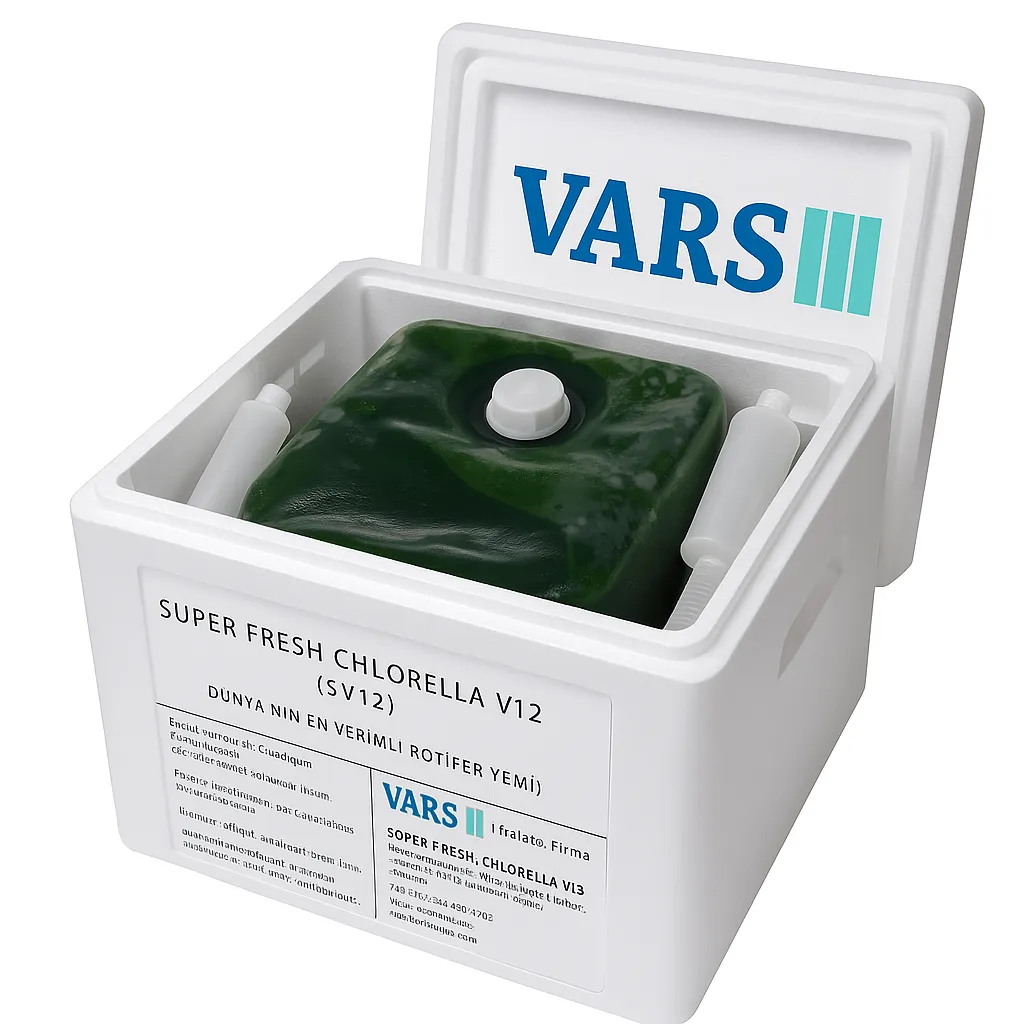
Super Fresh Chlorella V12 (SV12)
Concentrated liquid Chlorella microalgae, harvested fresh and shipped under cold chain.
- Live cell density: ~13 billion cells / ml
- Freshly cultured — never dried or frozen
- Up to 8-fold rotifer population growth in 3 days
- Rich in DHA, EPA & Vitamin B12
Super Fresh Chlorella V12 (SV12) — Full Description
Live liquid Chlorella concentrate developed specifically for rotifer cultivation, with DHA, EPA and vitamin B12 in every cell for both high- and low-density rotifer culture. Cultured by Chlorella Industry Co., Ltd. at the Chikugo plant in Fukuoka, Japan and air-freighted fresh under cold chain — never dried or frozen.
Super Fresh Chlorella SV-12 is a live liquid microalgae concentrate developed for intensive rotifer culture, and it is the reference product for hatcheries that measure their live-feed programme rather than run it by habit. It is trusted by commercial-scale hatcheries, research institutes and bio-secure systems, and it is the line behind the Aegean trials that lifted rotifer biomass up to eight-fold in three days.
It is alive, which is the whole specification: never dried, never frozen, with cell walls intact so rotifers can take the cells up directly instead of working through a reconstituted powder. That is what the fresh-cell condition buys — faster population turnover in the culture, and a nutritional profile that carries through the rotifer into the larva.
Because it is live, logistics are part of the product. It ships in a 20-litre insulated cold-chain case under a 2–6 °C chain and is ready to use on arrival, with no mixing step. Keep it cold, avoid temperature swings, and turn the container regularly so the cells stay in suspension.
Key Technical Specifications
Rotifer Cultivation
SV-12 was developed specifically for rotifer cultivation. The schedule below is the manufacturer's suggested plan for an S-type rotifer culture, reproduced as they publish it.
Suggested Rotifer Cultivation Plan
| Stage | Rotifer density (per ml) | SV-12 dosage |
|---|---|---|
| First dosage | 1,000 | 1.5 L morning · 1.5 L evening |
| Day 1 | 2,000 | 1.5 L morning · 1.5 L evening |
| Day 2 | 4,000 | 2.0 L morning · 2.0 L evening |
| Day 3 | 8,000 | Per the rotifer analysis below |
Typical Analysis of Rotifers Cultured on SV-12
| Fraction | Value | Basis |
|---|---|---|
| Lipid total | 12.7% | Ratio to dry net weight |
| EPA (20:5) | 4.1% | % of total fatty acids |
| DPA (22:5) | 5.8% | % of total fatty acids |
| DHA (22:6) | 10.5% | % of total fatty acids |
Cultivation parameters as published by the manufacturer. Confirm against your own strain, water chemistry and system before scaling a protocol.
Detailed Composition & Analysis
Nutritional Composition (per 100g dry net weight)
| Component | Amount |
|---|---|
| Protein | 54.80% |
| Fat (Lipids) | 13.20% |
| Fibre | 0.50% |
| CHO (Carbohydrates) | 24.30% |
| Ash (Minerals) | 7.20% |
Essential Minerals
| Mineral | Amount (mg/100g) |
|---|---|
| Calcium (Ca) | 250 mg |
| Magnesium (Mg) | 240 mg |
| Iron (Fe) | 150 mg |
| Potassium (K) | 1,000 mg |
| Phosphorus (P) | 1,950 mg |
Fatty Acid Profile (% of total lipid; total lipid 13.2%)
| Fatty Acid | Lipid No. | % of Lipids |
|---|---|---|
| Myristic Acid | C14:0 | 0.60% |
| Palmitic Acid | C16:0 | 14.40% |
| Palmitoleic Acid | C16:1 | 2.00% |
| Hexadecadienoic Acid | C16:2 | 8.10% |
| Stearic Acid | C18:0 | 0.60% |
| Linoleic Acid (ω6) | C18:2 | 18.80% |
| Linolenic Acid (ω3) | C18:3 | 13.70% |
| EPA (Eicosapentaenoic) | C20:5 | 8.50% |
| DPA (Docosapentaenoic) | C22:5 | 4.00% |
| DHA (Docosahexaenoic) | C22:6 | 15.00% |
Vitamins & Bioactive Compounds
| Compound | Concentration |
|---|---|
| Vitamin B12 | > 320 µg/l (0.4 mg/100g) |
| Vitamin B2 (Riboflavin) | 6.5 mg/100g |
| Vitamin B6 | 1.0 mg/100g |
| Vitamin C | 51 mg/100g |
| Niacin | 20 mg/100g |
| γ-Tocopherol (Vitamin E) | 19 mg/100g |
| Chlorophyll | 2.6 mg/100g |
| Carotene | 68 mg/100g |
| Xanthophyll | 91 mg/100g |
| Inositol | 200 mg/100g |
| Choline | 350 mg/100g |
Amino Acid Profile
| Amino Acid | g / 100g |
|---|---|
| Arginine | 2.82 g |
| Lysine | 2.82 g |
| Histidine | 1.05 g |
| Phenylalanine | 4.80 g |
| Tyrosine | 1.51 g |
| Leucine | 3.92 g |
| Isoleucine | 1.98 g |
| Methionine | 0.55 g |
| Valine | 2.87 g |
| Alanine | 3.70 g |
| Glycine | 2.95 g |
| Proline | 1.60 g |
| Glutamic Acid | 7.35 g |
| Serine | 1.89 g |
| Threonine | 2.06 g |
| Aspartic Acid | 4.37 g |
| Tryptophan | 1.04 g |
| Cystine | 0.51 g |
Lipid Classes Distribution
| Class | Proportion |
|---|---|
| Glycolipid | 36% |
| Phospholipid | 25% |
| Neutral Lipid | 36% |
Key Applications
- Intensive rotifer culture
- Copepod feed
- Marine hatchery green-water systems
Storage & Logistics
Store below 5 °C and never freeze. Turn the container regularly during storage, and turn or shake it gently before use so the cells are evenly distributed. Use within 30 days of the production date. Handling and shelf life as specified by the manufacturer.
Cultured in Japan, delivered alive
Every box of SV12 is grown by Chlorella Industry Co., Ltd. — the world's pioneering chlorella manufacturer — at the Chikugo plant in Fukuoka, Japan, then air-freighted straight to your hatchery under cold chain.
Grown in open culture pools up to 40 m across and only 10–15 cm deep, so every cell receives full sunlight at the plant of the world's first dedicated chlorella manufacturer.
Harvested fresh — never dried or frozen — packed in insulated styrene-foam boxes with cold packs and flown from Japan direct to your nearest airport.
Keep refrigerated at 2–6 °C and never freeze. Use within 30 days of production and turn the container regularly so the live cells stay evenly suspended.
What is chlorella?
Chlorella is a spherical, single-celled green microalga first described in 1890 by the Dutch microbiologist M.W. Beijerinck. It is one of the oldest life forms on Earth — believed to have appeared around two billion years ago — and it carries both chlorophyll a and b, the same photosynthetic pairing found in today's land plants. About 20 species are known, with countless strains differing in form and nutritional content.
Its value as a hatchery feed comes from sheer productivity: under photosynthesis a cell completes four divisions in about 20 hours, so one cell becomes sixteen in a day. Grown in shallow, sunlit pools and harvested as a live concentrate, chlorella feeds the rotifers on which roughly 70 farmed marine species depend during their first weeks of life.
Why buyers choose this line
Never dried, never frozen
Freshly cultured and shipped live under cold chain — the cells arrive intact rather than reconstituted.
Formulated for intensive rotifer culture
Each cell is rich in DHA, EPA and vitamin B12, the fractions rotifer nutrition is actually being bought for.
Stable, continuous culture
The manufacturer describes rotifer cultivation on SV12 as very stable and well suited to continuous systems, and publishes a dosing schedule for it.
Packed for temperature stability
Hard-box cool containers hold the temperature through transit, which is what protects a live product on a long route.
Frequently Asked Questions
Technical parameters, storage, biosecurity, and hatchery protocols for Super Fresh Chlorella V12 (SV12).
Rotifer & Microalgae Culture Protocol
Chlorella is the direct feed source for rotifer cultures — access green-water dosing guidance, cell density targets, and stocking parameters for consistent, high-density rotifer production.
Complementary Aqua Inputs & Solutions
Discover biosecure live feeds, specialized hatchery ova, functional feed additives, and Mediterranean seafood exports engineered to optimize your operational workflow.

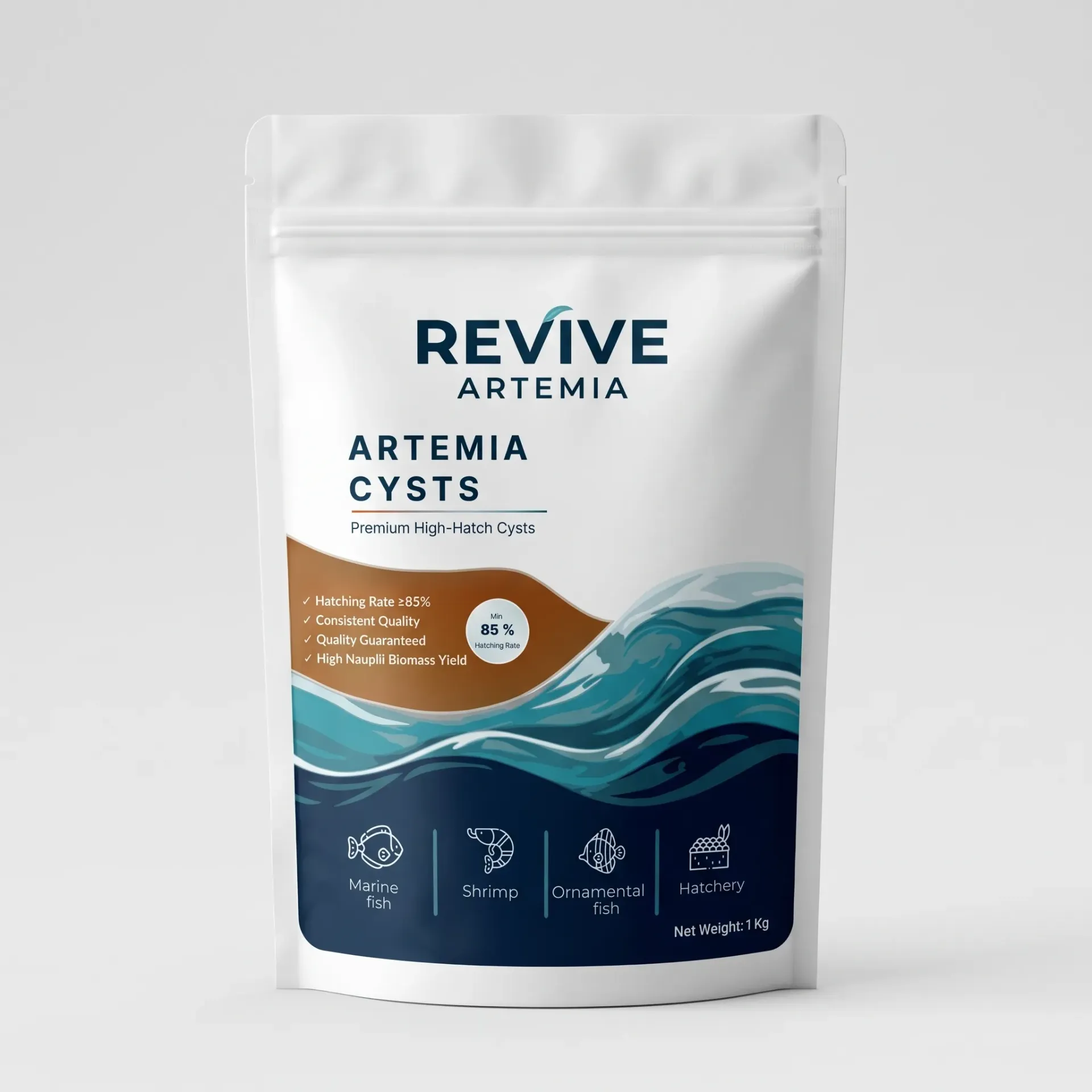
High-hatch rate live feed cysts, essential for marine larval nutrition and survival.

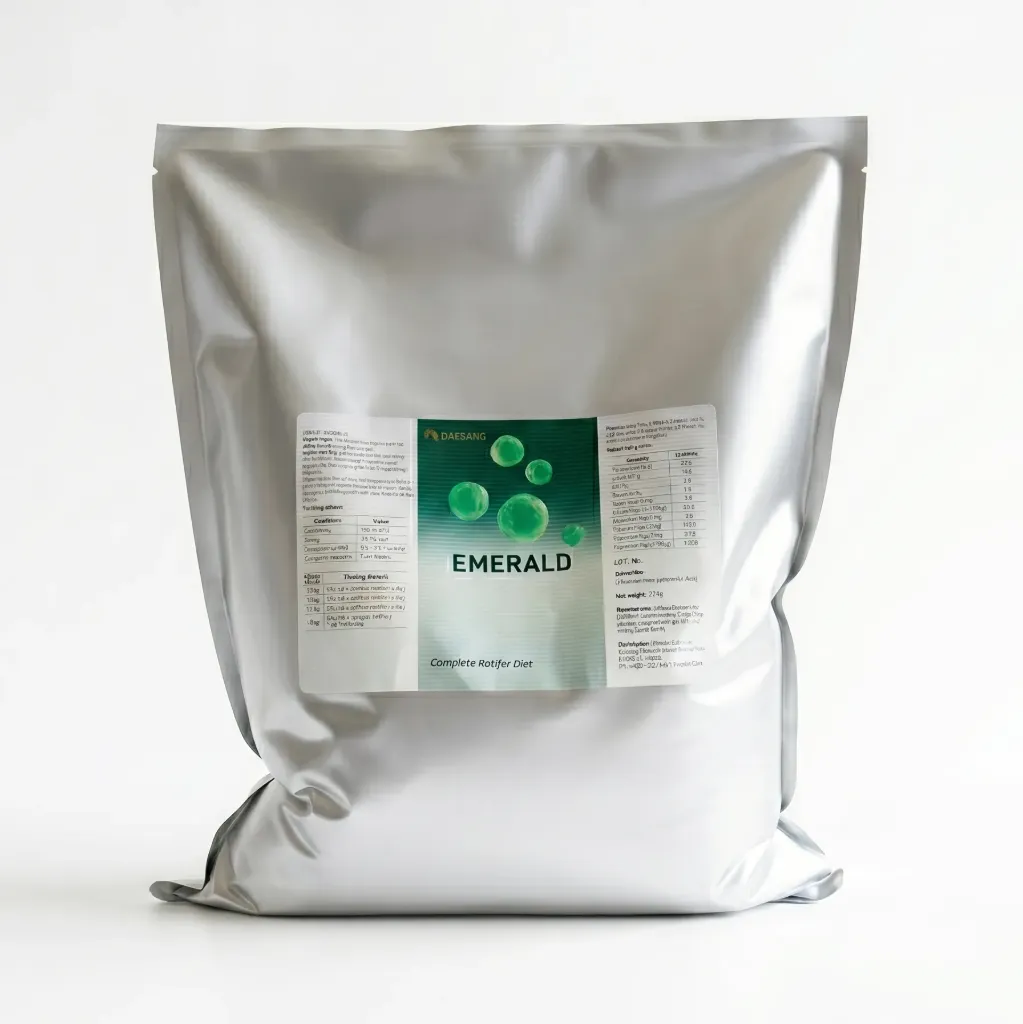
The rotifer diet for high- and low-density cultivation — spray-dried Chlorella from axenic culture, for batch, continuous and green-water systems.