了解鲑鱼发眼卵:成活率、生物安全与国际孵化场供应

RRReza R.·March 12, 2026·4 min read
了解鲑鱼发眼卵:成活率、生物安全与国际孵化场供应

Introduction

For commercial hatcheries, egg quality determines everything that follows — hatch rate, fry strength, feed efficiency, and long-term survival. The decision to source fertilized Atlantic salmon eggs or fertilized Coho salmon eggs at the eyed stage is not only a logistical choice, but a biological one.

The eyed stage represents a critical developmental milestone where the embryo has formed visible eye pigmentation and gained structural resilience. This stage is widely preferred for international shipment because it significantly reduces transport mortality and stress compared to earlier stages.

Selecting the right eyed salmon eggs supplier is therefore one of the most important strategic decisions for hatchery profitability.

What Are Eyed salmon eggs?

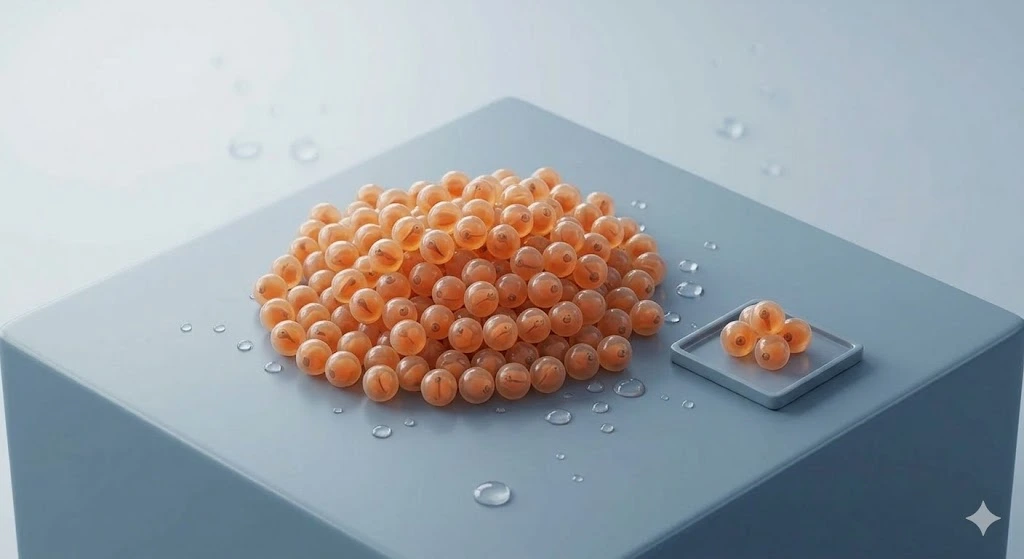
Eyed salmon eggs are fertilized eggs that have developed to the point where the embryo’s eyes are visible through the chorion. At this stage:

The embryo has passed early fragile development Structural strength is significantly higher Eggs tolerate transport better Hatch synchronization becomes more predictable

Development in salmon eggs is measured in degree days:

Degree Days = Water Temperature (°C) × Number of Days

Atlantic salmon eggs typically hatch between 480–520 degree days, depending on incubation temperature and stability.

Because development is temperature dependent, controlled incubation is essential before shipment. High-quality suppliers carefully manage temperature, oxygen, and gas levels to ensure biological stability prior to delivery.

Incubation Parameters That Determine Hatch Success

High survival rates begin long before shipment. They depend on strict environmental control during incubation.

Temperature Control

Transport temperature: typically 2–5°CIncubation temperature: generally maintained below 7.5°CTemperatures above 7.5°C increase risk of deformitiesTriploid eggs should remain below 6°C

Stable temperature prevents premature hatching and skeletal abnormalities. Sudden fluctuations can induce stress-based hatching and lower survival.

Oxygen and Gas Management

For optimal egg development:

Oxygen saturation should remain above 90%Carbon dioxide should remain below 6 mg/LTotal gas saturation must not exceed 100%

Gas supersaturation can lead to bubble formation in tissues and increased mortality. Professional hatchery-grade suppliers continuously monitor these parameters.

Water Flow During Incubation

Optimal water flow ensures proper gas exchange and prevents fungal development. Excessive turbulence can damage eggs, while insufficient flow reduces survivability.

Consistent incubation management directly influences:

Hatch rate Alevin synchronization Post-hatch robustness

Biosecurity in Fertilized Salmon Egg Supply

Eggs and early-stage salmon are highly susceptible to pathogens. Professional egg suppliers operate under strict biosecurity protocols to prevent contamination.

Key biosecurity elements include:

Disinfection of eggs post-fertilization Controlled box disinfection upon arrival Dedicated biosecure production zones UV or ozone water sterilization Restricted personnel movement

For international hatcheries, disease-free certification and export health documentation are critical. Biosecurity failures at the egg stage can cause long-term production losses and regulatory complications.

Atlantic vs Coho Salmon Eyed Eggs

Both Atlantic and Coho salmon are commercially valuable species, but hatchery requirements may differ.

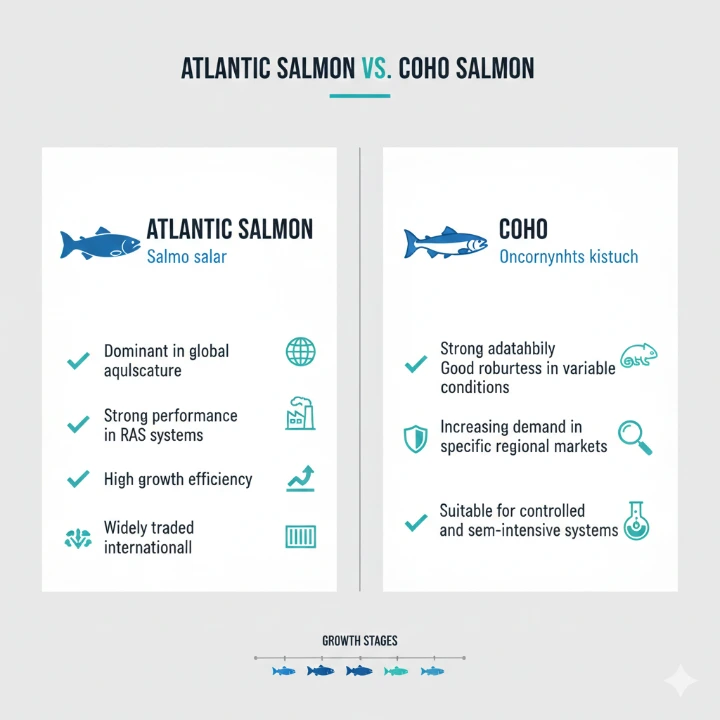
Atlantic Salmon (Salmo salar)

Dominant in global aquaculture Strong performance in RAS systems High growth efficiency Widely traded internationally

Coho Salmon (Oncorhynchus kisutch)

Strong adaptability Good robustness in variable conditions Increasing demand in specific regional markets Suitable for controlled and semi-intensive systems

Choosing between Atlantic and Coho fertilized eggs depends on target market, system design, and growth strategy.

Atlantic vs Coho Salmon Comparison

International Shipping of Eyed salmon eggs

International shipment is one of the primary reasons hatcheries prefer the eyed stage.

Best practices include:

Maintaining 2–5°C during transportAvoiding temperature shock during transfer  Monitoring temperature logs Controlled density packing Immediate disinfection protocol upon arrival

Proper logistics management directly influences final hatch percentage. Even high-quality eggs can suffer losses if transport conditions are poorly controlled.

A professional supplier should provide:

Transport temperature records Health certificates Export documentation Technical guidance upon arrival

Common Hatchery Failures Linked to Poor Egg Quality

Low-grade or poorly handled fertilized salmon eggs can result in:

Reduced hatch rates Deformed fry Yolk sac abnormalities Fungal outbreaks Weak swim-up behavior Poor feed response

These issues are often linked to temperature instability, oxygen imbalance, or inadequate biosecurity during incubation.

Long-term production profitability starts at the egg stage.

How to Evaluate an Eyed salmon eggs Supplier

Before purchasing fertilized Atlantic or Coho salmon eggs, hatcheries should evaluate suppliers based on:

Documented biosecurity procedures Health and disease certification Incubation parameter transparency Temperature-controlled logistics Genetic program credibility Technical support availability Export compliance assistance

A reliable supplier does not only ship eggs — they support hatchery success from incubation through first feeding.

Partnering for Reliable Hatchery Performance

High-quality eyed salmon eggs are the biological foundation of any successful salmon hatchery operation.

Whether sourcing fertilized Atlantic salmon eggs or fertilized Coho salmon eggs, the supplier’s incubation control, biosecurity standards, and transport management directly impact:

Hatch synchronization Fry robustness Production predictability Long-term survival

For commercial hatcheries seeking reliable egg supply, production calendar planning and early coordination are strongly recommended.

Request availability for fertilized Atlantic or Coho eyed eggs.

Contact our aquaculture team for technical specifications and upcoming production windows.

Broodstock & Genetics Program

Secure Your Eyed Salmon Ova Allocation

Ensure genetic optimization and biosecure cold-chain logistics for Atlantic or Coho salmon eggs. Coordinate shipping slots with our global compliance directors.

Share:
Featured Products Mentioned

Featured Aqua Inputs & Export Solutions

Explore premium live feed concentrates, salmonid ova, and certified seafood exports referenced in this article.

Explore Product Catalog
鱼粉
饲料添加剂
已认证

高蛋白、高消化率的海洋原料,对水产养殖的最佳生长、健康和饲料效率至关重要。

≤ 10%
水分
55–65%
蛋白质
#蛋白质 55-65%#可持续来源
谷朊粉
饲料添加剂
已认证

优质粘合剂和植物蛋白源,优化颗粒稳定性、质地和营养输送。

150%
吸水率
~82%
蛋白质
#蛋白质 ≥ 82%#吸水率 ≥ 150%
马铃薯浓缩蛋白粉
饲料添加剂
已认证

优质植物浓缩蛋白,具有极佳的消化率和均衡的氨基酸组成。

≥ 76%
蛋白质
92%
消化率
#蛋白质 ≥ 76%#消化率 92%