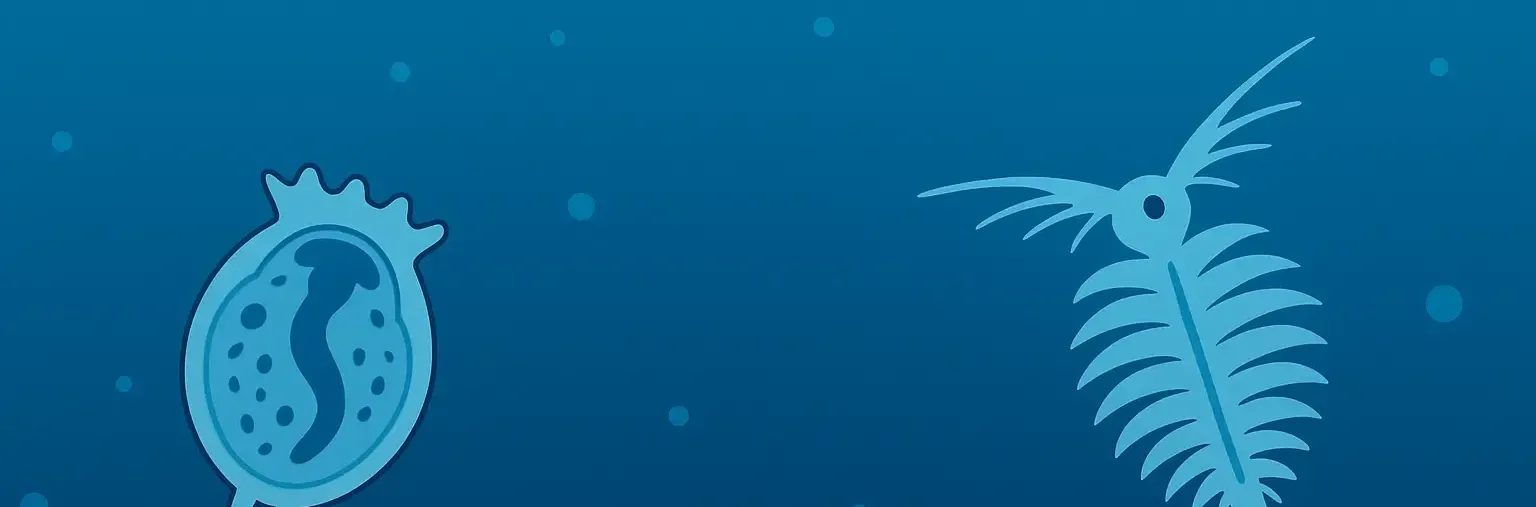
In the commercial production of marine finfish and penaeid shrimp, the hatchery phase represents both the highest biological risk and the greatest determinant of final harvest yield. Marine fish larvae hatch with underdeveloped digestive systems, lacking a functional stomach, gastric glands, and pepsin digestion. In this fragile early window, micro-particulate dry diets cannot be ingested or efficiently digested without inducing gut impaction or severe water deterioration.
Consequently, industrial larviculture relies unconditionally on live zooplankton vectors: specifically the rotifer (Brachionus plicatilis and Brachionus rotundiformis) for the initial feeding window, followed sequentially by brine shrimp (Artemia spp.) nauplii. Managing culture density kinetics, bio-encapsulation protocols, and strict microbial hygiene across these two foundational organisms is what separates profitable commercial hatcheries from failing operations.
Rotifer Culture Kinetics: Density, Reproduction & Biosecurity
Rotifers function as living nutrient capsules whose small size (100 µm to 250 µm lorica length) fits the physical gape limitations of first-feeding larvae. However, maintaining steady daily rotifer harvests demands rigorous biological control:
- Species-Specific Strain Selection: Hatcheries deploy S-type (Brachionus rotundiformis, 100–180 µm) for small-gape marine larvae (such as groupers and seabream) at higher temperatures (28–30 °C), while L-type (Brachionus plicatilis, 180–280 µm) is preferred for seabass and flatfish at 22–25 °C.
- Exponential Multiplication Kinetics: Under optimal continuous feeding regimes, rotifer population doubling occurs every 24 to 36 hours. Achieving specific growth rates of r > 0.55 ext{ day}^{-1} requires maintaining egg ratios (amictic parthenogenetic females bearing subitaneous eggs) consistently between 30% and 45%. An egg ratio falling below 20% is an immediate warning of nutritional deficiency or impending tank crash.
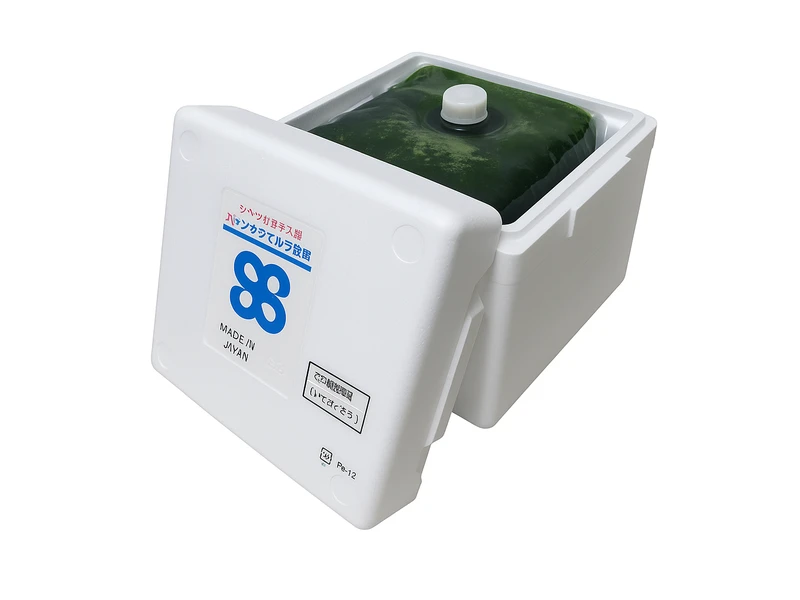
- Microbial Control & Vibrio Exclusion: Rotifers filter particulate matter indiscriminately, accumulating up to 10^4 bacterial cells per individual within their gut tract. Utilizing live microalgae such as Super Fresh Chlorella V12 (SV12) dramatically reduces opportunistic Vibrio proliferation compared to baker's yeast, protecting larval rearing tanks from catastrophic bacterial enteritis.
Artemia Bioenergetics: Instar-I vs. Enriched Instar-II Nauplii
Following rotifer weaning, larvae transition to brine shrimp. A common operational error is treating all Artemia nauplii identically regardless of developmental stage:
- Instar-I Nauplii (Endogenous Nutrition): Newly hatched Instar-I nauplii subsist entirely on internal yolk reserves. Their mouths and anuses are not yet functional; therefore, they cannot ingest external enrichment emulsions. Because Instar-I organisms rapidly burn valuable yolk energy through swimming movement, they should be harvested immediately upon hatching and fed when tiny gape size (400–450 µm) is required.
- Instar-II Nauplii (Exogenous Filter Feeding): Within 8 to 12 hours post-hatch at 28 °C, nauplii molt into Instar-II. At this point, the alimentary canal opens, and active non-selective particle filtration begins. Instar-II nauplii exhibit depleted endogenous lipids and must undergo bio-encapsulation (enrichment) for 12 to 24 hours with highly unsaturated fatty acids (DHA and EPA), fat-soluble vitamins, and trace minerals before presentation to larvae.
| Live Feed Stage | Organism Size (Length / Width) | Digestibility & Enzymes | Primary Dietary Role in Larviculture |
|---|---|---|---|
| S-type Rotifer | 100 - 180 µm × 80 - 120 µm | High (endogenous proteolytic enzymes) | Day 3 - Day 10: First feeding for small gape larvae |
| L-type Rotifer | 180 - 280 µm × 120 - 180 µm | High (rich in free amino acids) | Day 5 - Day 18: Co-feeding & swim bladder inflation |
| Instar-I Artemia | 420 - 500 µm × 160 - 200 µm | Moderate (contains intact yolk sac) | Day 15 - Day 22: Initial transition to large live prey |
| Enriched Instar-II Artemia | 600 - 800 µm × 220 - 280 µm | High (tailored DHA:EPA:ARA lipid profile) | Day 20 - Day 35: Metamorphosis & bone ossification |
Bio-Encapsulation & Fatty Acid Balancing (DHA / EPA / ARA)
Neither wild rotifers nor un-enriched Artemia naturally synthesize long-chain polyunsaturated fatty acids (n ext{-3 LC-PUFA}) in quantities sufficient to prevent skeletal deformities and mortality during finfish metamorphosis:
- DHA:EPA Balance: While EPA (eicosapentaenoic acid) supports cell membrane integrity and immune resistance, DHA (docosahexaenoic acid) is critical for optic neural development, brain tissue synthesis, and rapid schooling behavior. Marine finfish require a dietary DHA:EPA ratio of at least 2:1.
- Arachidonic Acid (ARA) & Eicosanoid Synthesis: ARA (20:4n ext{-6}) serves as the precursor for prostaglandins and leukotrienes. Precise ARA supplementation during the rotifer-to-Artemia transition regulates cortisol stress response and ensures correct bilateral pigmentation in flatfish, preventing albinism and malpigmentation.
- Decapsulated Cysts Alternative: When hatching facilities experience seasonal temperature drops or seek to eliminate shell separation labor entirely, Decapsulated Dry Artemia Cysts offer a sterile, 100% shell-free alternative that delivers 30% to 40% higher direct energy to post-larvae by avoiding embryonic hatching expenditure.
Industrial SOP & Practical Quality Safeguards
To maintain year-round predictability and eliminate production bottlenecks, commercial hatcheries implement four operational safeguards:
- Harvest Washing Protocols: Live feeds must be harvested on concentrated concentrator screens (50 µm for rotifers, 120 µm for Artemia) and rinsed vigorously with UV-sterilized seawater for a minimum of 10 minutes to wash away metabolic ammonia and unassimilated enrichment lipids.
- Cold Storage Banking (Suspended Animation): Once harvested and enriched, live feeds rapidly burn fatty acid reserves if kept at ambient hatchery temperatures. Holding harvested Artemia in aerated cold banking tanks at 4 °C to 6 °C suspends metabolism, preserving lipid payloads for up to 24 hours without mortality.
- Cyst Provenance & Biosecure Sourcing: Industrial operations require certified high-salinity lake harvests (such as Siberian Lake or Aral Sea stocks) with audited hatching efficiency (> 90%) and free-flowing physical purity. Explore our tested Artemia cysts portfolio to review origin tracking and batch analysis.
To explore tailored live-feed feeding tables, high-density rotifer protocols, or specialized enrichment formulations for your hatchery, contact our aquaculture nutrition specialists for a direct consultation.