
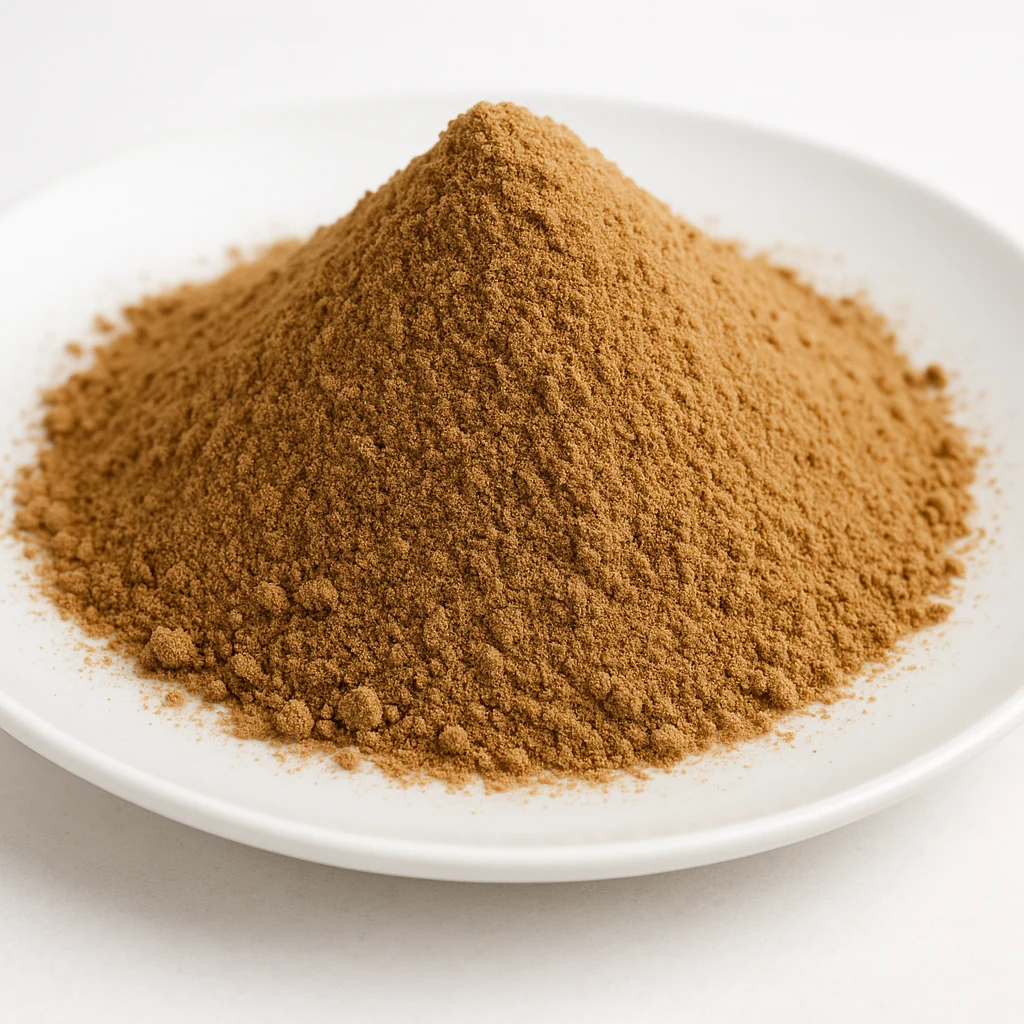
Fish Meal should be purchased against an agreed specification, not a protein percentage or grade name alone. Raw material, processing, storage and the intended diet all matter. Separate a supplier's declared specification from a laboratory result for the batch being offered.
Processing and heat damage
Ask how the raw material was handled and how the meal was cooked, pressed and dried. Process names such as steam-dried or low-temperature describe an approach, not a universal guarantee of digestibility or freedom from undesirable compounds. Gas, equipment and product temperatures are not interchangeable measurements.
Gizzerosine research cited below concerns gizzard erosion in chicks. It does not establish the same disease mechanism in fish larvae. Fish-feed suitability needs evidence for the target species and diet; poultry findings should not be rewritten as a fish-hatchery diagnosis.
Read analytical values with their methods
No single test provides a complete quality assessment. Agree the sample, method, units and reporting basis before setting limits or comparing offers. A result from raw fish cannot automatically be treated as a result for finished meal.
| Parameter | Clarification to request | Comparison risk |
|---|---|---|
| Protein, fat, ash and moisture | Method and as-received or dry-matter basis | Percentages may use different denominators |
| TVN and biogenic amines | Sample material, method and units | One threshold may not describe different materials |
| Digestibility | Enzyme method or feeding-trial conditions | Results from different assays are not equivalent |
TVN and histamine can be part of a buyer's analytical panel, but this article does not assign universal hatchery-grade cutoffs. Interpret results within the agreed specification and the evidence for the intended use. Seek specialist advice where a result or its method is unclear.
Nutritional suitability
Assess amino acid availability and the complete diet, not just crude protein. Pepsin testing can help identify differences, but a laboratory assay is not a direct measurement of growth in every fish species. Enzyme concentration and procedure matter when comparing results.
Ask for relevant feeding evidence and evaluate a new ingredient within the formulation and manufacturing process. Review alternatives in the feed-ingredient catalogue with the formulator rather than treating one branded grade as mandatory for all larval feeds.
Storage, traceability and acceptance
Confirm the antioxidant treatment, storage instructions and transport requirements for the actual meal. Do not assume a generic antioxidant dose or a natural ingredient guarantees legal compliance, oxidation control or shelf life. Obtain the supplier's specification for the destination and intended use.
On receipt, check packaging, batch identification and accompanying analyses. Keep a representative sample under the agreed procedure and record any discrepancy before releasing the batch to production. Procurement criteria should cover composition, microbiological quality and relevant contaminants as well as processing history. The aquaculture glossary explains the terminology used in specifications.