Pregunte a cualquier responsable de un criadero marino qué limita su producción de larvas y la respuesta rara vez serán los peces. Son los rotíferos, y detrás de cada cultivo de rotíferos denso y estable hay un alimento fiable. Super Fresh Chlorella V12 (SV12) es nuestra solución: un concentrado de Chlorella viva en suspensión líquida desarrollado específicamente para el cultivo de rotíferos, producido en Japón y transportado por vía aérea a los criaderos bajo estricta cadena de frío.
Este artículo recopila todo lo que habitualmente se consulta sobre SV12: qué es realmente la Chlorella, dónde y cómo se produce, su especificación nutricional completa y el protocolo de alimentación recomendado.
¿Qué es la Chlorella en realidad?
La Chlorella es una microalga verde unicelular, casi esférica y de apenas unos micrómetros de diámetro, en el mismo rango de tamaño que un glóbulo rojo. Fue descrita por primera vez en 1890 por el microbiólogo neerlandés M.W. Beijerinck. Hoy se conocen unas 20 especies con numerosas cepas que varían en morfología y perfil de nutrientes.
Dos características hacen que la Chlorella sea extraordinaria como organismo forrajero:
- Se multiplica con una rapidez excepcional. Mediante fotosíntesis, una célula de Chlorella realiza cuatro divisiones en unas 20 horas, donde las células convencionales solo logran dos. Una balsa de cultivo puede cosecharse con un ritmo que muy pocos organismos pueden sostener.
- Constituye la base de la cadena trófica en los criaderos marinos. Los rotíferos se alimentan de Chlorella y las larvas de peces consumen los rotíferos. Alrededor de 70 especies comerciales (entre ellas dorada, lenguado, pez globo y atún) se crían con rotíferos alimentados con Chlorella. El alga que la mayoría de las larvas nunca ve directamente sigue siendo la base de sus primeras semanas de vida.
Cultivada en Chikugo, enviada fresca desde Japón
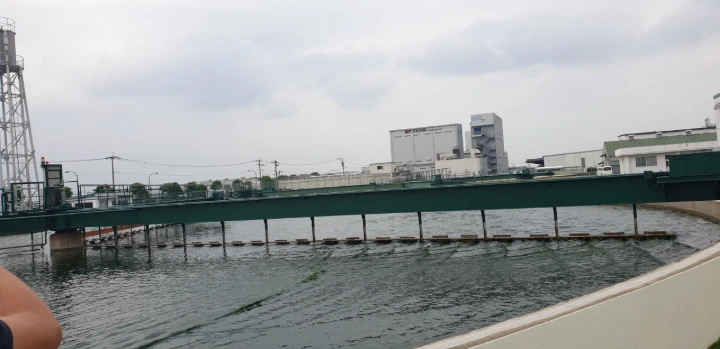
SV12 es producida por Chlorella Industry Co., Ltd., empresa pionera mundial en la producción de Chlorella, en su planta del distrito de Chikugo en la prefectura de Fukuoka, Japón. Las algas crecen en balsas abiertas de hasta 40 metros de ancho pero con solo 10–15 centímetros de profundidad, una disposición que garantiza que cada célula reciba luz solar directa.
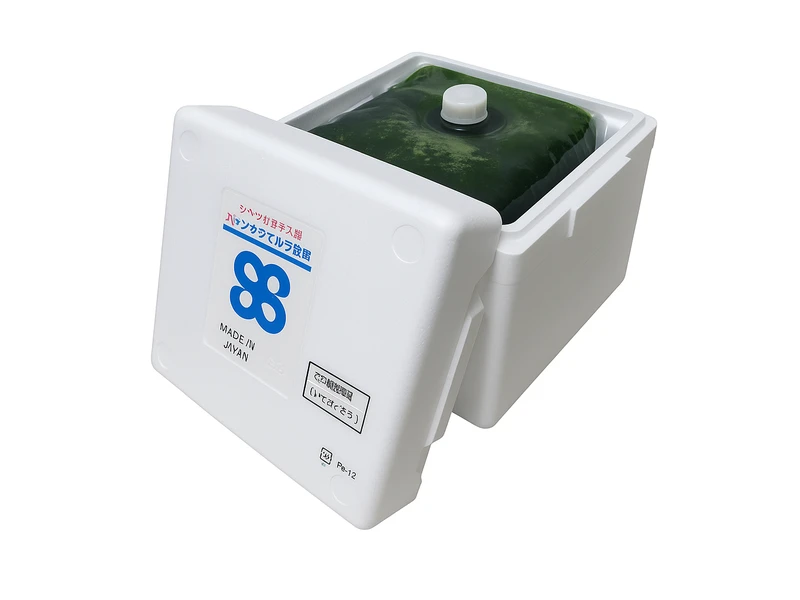
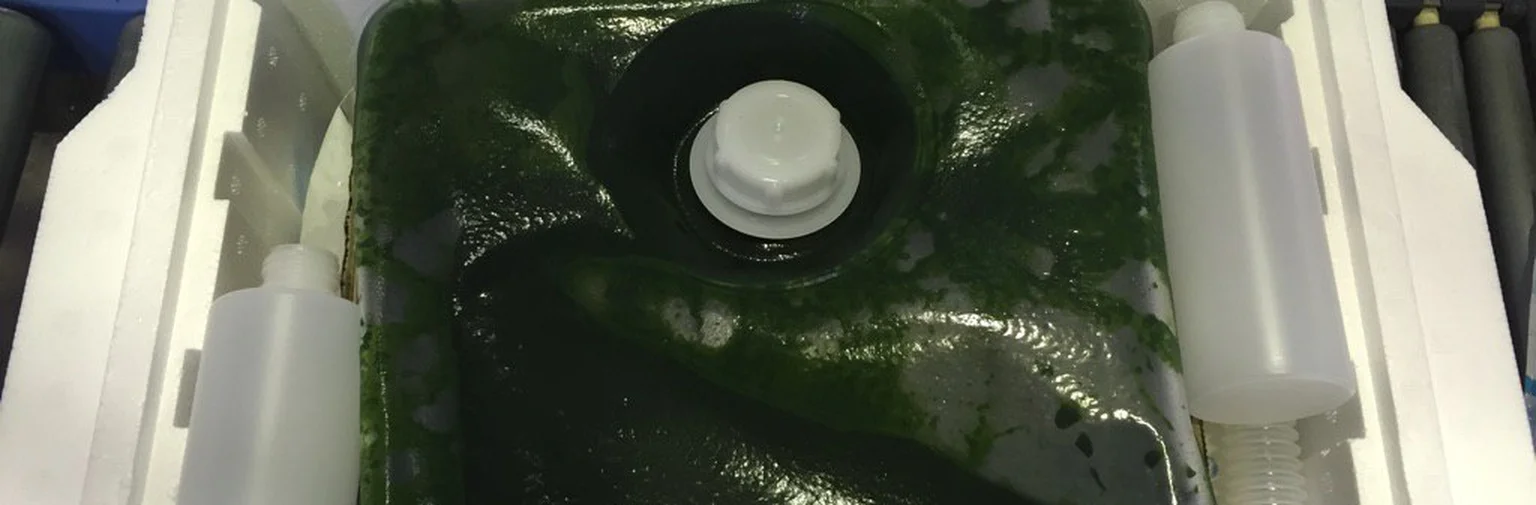
Lo que distingue a SV12 de los productos de microalgas secos o congelados es lo que ocurre tras la recolección: nada. El concentrado no se seca ni se congela jamás. Se envasa en frío en cajas isotérmicas de poliestireno con acumuladores de frío y se envía por vía aérea desde Japón, asegurando que las células lleguen vivas al criadero.
Qué contiene una caja de SV12
Los parámetros principales de la especificación oficial de SV12 son:
| Parámetro | Especificación |
|---|---|
| Densidad de células vivas | ~13.000 millones de células/ml |
| Tamaño celular | 3–6 µm |
| Peso neto seco | > 135 g/l |
| Vitamina B12 | > 320 µg/l |
| DHA | 17±2% del total de ácidos grasos |
| EPA | > 2% del total de ácidos grasos |
El DHA y el EPA son indispensables porque los alevines marinos requieren ambos, y la Chlorella convencional apenas contiene ninguno de los dos. Cada célula de SV12 aporta DHA, EPA y vitamina B12, lo que permite suministrar los rotíferos directamente a las larvas sin necesidad de la compleja etapa de enriquecimiento posterior. La vitamina B12 favorece además una reproducción estable de los rotíferos.
Por cada 100 g de peso seco, la Chlorella SV12 contiene aproximadamente 54,8% de proteína, 13,2% de grasa y 24,3% de carbohidratos, junto con un perfil completo de aminoácidos y minerales esenciales como calcio, magnesio, hierro, potasio y fósforo. Las tablas completas están en la ficha técnica accesible desde la página del producto.
El protocolo de alimentación: de 200 a 1.200 rotíferos por mililitro
SV12 es una suspensión de alta concentración, apta para cultivos de rotíferos tanto de alta como de baja densidad y estable para sistemas continuos. El plan de cultivo recomendado por el fabricante es:
| Día | Densidad de rotíferos (ind./ml) | Dosis de SV12 (por millón de rotíferos) | Frecuencia de alimentación |
|---|---|---|---|
| Inicio | mín. 200 | 5 ml — saturar el tanque | Primera dosis |
| Día 1 | 300 | 2,5 ml | 4–6 veces al día |
| Día 2 | 600 | 3–4 ml | 4–6 veces al día |
| Día 3 | 1.200 | > 4 ml | 4–6 veces al día |
Condiciones de cultivo que deben mantenerse junto con el plan de dosificación:
- Saturación de oxígeno superior al 90%
- Temperatura del agua entre 25 y 28 °C
- Cosecha del 50% del cultivo a partir del 4.º día
Siguiendo este esquema, el cultivo se multiplica aproximadamente por seis en tres días, habiéndose registrado incrementos de hasta ocho veces en ensayos de campo, tal como explicamos en nuestro artículo sobre el aumento de la producción de rotíferos con Chlorella fresca.
Efecto de SV12 en los propios rotíferos
La calidad del alimento se refleja en el rotífero, no en el envase. Los análisis posteriores al cultivo con SV12 muestran un 12,7% de lípidos totales sobre peso seco, con un 4,1% de EPA, un 5,8% de DPA y un 10,5% de DHA sobre los ácidos grasos totales, una carga lipídica inalcanzable con levaduras o algas estándar. Este es el aporte nutricional que reciben las larvas en su primera alimentación.
Almacenamiento y manipulación
SV12 es un producto biológico vivo y debe tratarse en consecuencia:
- Almacenar refrigerado a 2–6 °C y protegido de la luz solar directa
- Nunca congelar: la congelación destruye las células vivas
- Consumir dentro de los 30 días posteriores a la fecha de producción
- Girar el recipiente periódicamente durante el almacenamiento y agitar suavemente antes de usar para homogenizar la suspensión
Adquisición de SV12
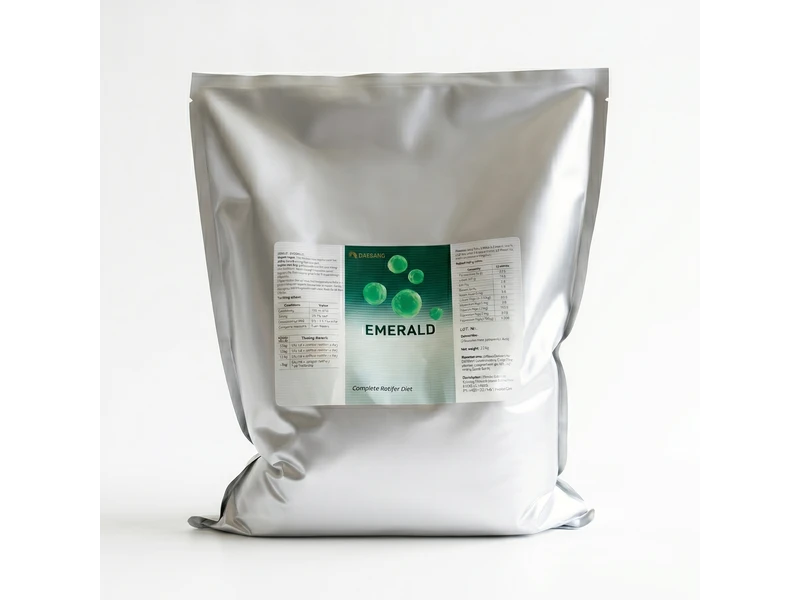
Suministramos SV12 a criaderos en todos nuestros mercados con la cadena de frío asegurada desde la planta de Chikugo hasta sus instalaciones. Si su operación requiere acondicionamiento de agua verde mediante producto deshidratado, Emerald Chlorella en polvo cubre esa necesidad; no obstante, para el cultivo intensivo de rotíferos, las células vivas marcan la diferencia.
Solicite un presupuesto o la ficha técnica en la página del producto SV12, o contacte con nuestro equipo para definir un plan de ensayos adaptado a sus tanques.